Red Berry Workshop

I may be crazy, but it seems to me that . . .

The Polished Vessel and the Hidden Heart

 “Why do you wash the outside of a cup? Do you not know that he who made the inside is also the one who made the outside?” – The Gospel of Thomas


My Friends.

Take a look around you this fine morning. We see a congregation of pressed suits and Sunday best dresses. We take great pride in our appearances. Do we not? We scrub our doorsteps. We wax our Buicks until they shine like mirrors. We ensure our lawns are trimmed to the very inch. There is a certain comfort in a clean exterior. It tells the neighbors, and it tells ourselves, that we have things under control.

But let us lean in a little closer to the Word this morning. Consider, if you will, the simple coffee cup sitting in your cupboard at home.

Imagine a housewife hosting a bridge club. She brings out her finest china, shimmering under the parlor lights. The outside is pristine, decorated with delicate painted roses. But if that cup is filled with the residue of yesterday’s bitterness, is it fit for a guest? Of course not.

Today’s scripture poses a piercing question to us today: “Why do you wash the outside of a cup? Do you not know that he who made the inside is also the one who made the outside?”

We spend our lives frantically scrubbing the “outside.” We polish our reputations. We curate our smiles. We make sure our public testimonies are beyond reproach. We are terrified that someone might see a smudge on the porcelain of our character.

To honor the Divine only with our outward manners while harboring resentment, greed, or pride within is a hollow gesture. It is a biological and spiritual contradiction. You cannot claim to love the Divine while neglecting the very workshop where the Divine works.

Your heart. Your soul.

My friends, the “outside” is a fleeting thing. The finest house-paint will eventually peel. The brightest silver polish is destined to tarnish with the passing years. But the “inside”, that sacred, internal vessel fashioned by the hands of the Divine is the only thing truly built to endure.

This week, as you go about your business. In the shop. In the office. In the kitchen. Ask yourself this, “Am I merely rinsing the surface to impress my neighbor? Or am I inviting the light of the Divine to scour the hidden corners of my soul?”

Let us stop living as two-dimensional cutouts. Let us be whole. For the Divine not only fashioned the stars. The Divine also fashioned your soul. And the Divine desires to find it clean, sweet, and ready for service.

Amen.

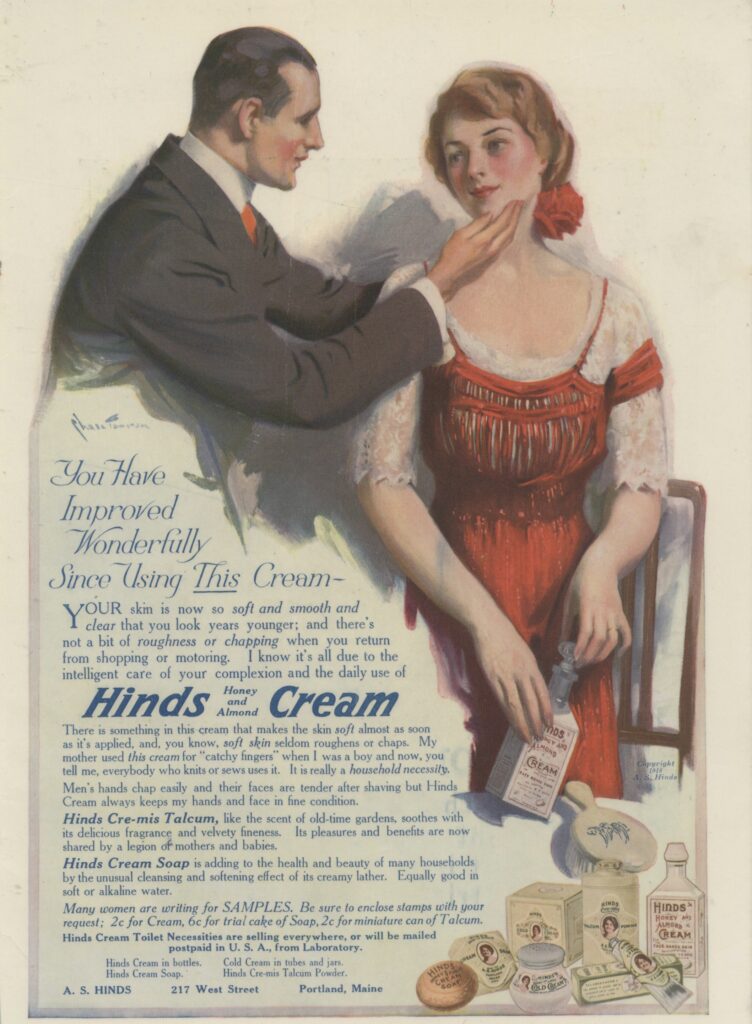
Dear Shirley

Dear Shirley,

My husband has insisted on purchasing one of those “TV dinners” for our Wednesday evening meal. He says it allows us more time to enjoy our favorite programs, but I feel like a failure as a housewife serving peas from a foil compartment! Am I being a “stuffed shirt,” or is the kitchen table becoming obsolete?

Flustered Franny


Dear Flustered Franny,

Don’t let a little aluminum foil rattle your pearls! While a home-cooked roast is the gold standard, even a general needs a night off from the front lines. Consider the TV dinner a “technological holiday.” If the guilt is too much to swallow, serve the Salisbury steak on your finest china and keep the television off until dessert. A happy husband is a well-fed one, even if his gravy comes in a pre-measured square.

Shirley

WRYL Presents

The Wit And Wisdom Of Horace B Miesner

The early worm gets the bird… eventually.


WRYL – The Voice of the Great Up North

Chapter 23: The Woman Who Waited

The heavy front door of the VFW groaned shut, sealing out the amber light of the late afternoon. Peggy sat in the passenger seat of Eleanor’s battered Chevy. Her mind spinning faster than the gravel under the tires. Clutched in her arms, the “For Ethan’s Eyes Only” envelope felt heavy, a physical weight of secrets and skipped heartbeats.

“You’re awfully quiet, sugar,” Eleanor said, her eyes fixed on the winding blacktop. “Those old warhorses in there can talk your ear off, but they don’t mean much harm. Mostly just bored.”

Peggy looked at Eleanor’s profile. The woman’s hands were steady on the wheel, her face a map of small-town resilience. “Harold mentioned a woman named Grace. He said she stayed in Royal after everyone else left. After the power was cut.”

Eleanor’s foot hesitated on the gas for a fraction of a second. The engine hummed a lower note. “Harold always did have a soft spot for a ghost story. But Grace… she wasn’t a story. She was real enough.”

“Did you know her?”

Eleanor sighed, a sound like dry leaves skittering across pavement. “Everyone knew the girl who waited. She lived in that little Victorian house near Royal Park. The park with the gazebo. The house was a beautiful place before the quarantine. After? It was like the world just forgot to keep turning for her.”

Peggy’s breath hitched. The gazebo. The image from the puzzle, the image on the sheet music. It wasn’t just a romantic illustration; it was a landmark of a tragedy.

“She had a child, didn’t she?” Peggy pressed.

“A boy,” Eleanor said. “Born a few years before the ’59 outbreak. Grace was… different after that. Fiercely private. When the sheriff put up the roadblocks for the measles quarantine, she didn’t complain. Some say she liked the silence. But then the quarantine lasted too long. The measles story started to smell funny to folks in Oakhaven. People stopped getting sick, but the guards stayed. And when they finally left? Royal was just a shell.”

“Why didn’t she leave with the others?” Peggy asked.

“She told my mom once that she’d promised someone she’d be there when the music started again. Can you imagine? Waiting in a town with no lights, no mail, just the wind whistling through the abandoned town.” Eleanor shook her head. “She stayed until 1964. By then, the boy was school-age. The county finally sent a social worker in to force them out. They moved her to a state facility over in Chippewa Falls. The boy… well, he went into the system.”

Peggy gripped the envelope. “What was the boy’s name?”

Eleanor turned the blinker on, the rhythmic click-clack filling the tense silence of the car. “I really don’t remember. Maybe after his father. But Grace never would say who the father was. Just that he was a traveling man. Or something like that. Some said the father was a musician. He might have played in the Tommy Melk band”

The realization hit Peggy like a physical blow. Tommy Melk and the Melk Duds? Ethan’s grandfather? The family friend she told the old men about wasn’t just a friend. Could it be…?

As they pulled into the driveway of a small, neat house in Black River Falls, Eleanor turned off the ignition. The silence was absolute.

“Peggy,” Eleanor said softly, “that puzzle those old men were working on? It’s been in that VFW hall for years. No one ever finishes it because one piece is missing. Just like the truth about Royal. Some things are better left lost in the woods.”

Peggy looked at the dark silhouette of the trees against the twilight sky. Somewhere out there, past the highway and the history books, the ghost town of Royal was waiting. And she knew, with a terrifying certainty, that she held the missing piece in her hand.

The Least, the Last, and the Lost

“Truly I tell you, whatever you did for one of the least of these brothers and sisters of mine, you did for me.” – Matthew 25:40


Good morning, friends and neighbors. We live in a time of great prosperity. We have new cars in the driveway. The refrigerators hum in our kitchens. Our future looks brighter than a June morning. But in the midst of this Great American Century, we must be careful not to let the glare of our own success blind us to the person standing in the shadows.

There is a profound mystery at the heart of our faith. A teaching from the Divine that turns the social ladder right on its head. It is this: Truly I tell you, whatever you did for one of the least of these brothers and sisters of mine, you did for me.

Now, we often go looking for the Divine in the high places. We look for majesty in the cathedral spires, or we look for power in the thunder of the clouds. But this morning’s truth tells us something different. It tells us that the Divine chooses to wear a humble disguise.

Think of the least of these in our own town. The man sitting on the park bench who’s fallen on hard times. The widow, struggling to keep her garden tidy. The child from the wrong side of the tracks with a hole in his shoe.

When you offer a handshake to the forgotten, or a hot meal to the hungry, you aren’t just being a good citizen or a decent fellow. You are actually reaching out and touching the Divine. Every act of kindness to the lowly is a direct gift to the Divine.

Friends, we often worry about how we stand in the eyes of our community. We want the boss to think we’re industrious. We want the neighbors to see us as respectable. But the real audit of our souls happens when no one is watching, except the Divine.

If we are important people who treat the unimportant with indifference, we are missing the point of our existence. If we tip our hats to the Mayor but turn our backs on the vagrant, we have turned our backs on the Divine. You see, the way we treat the person who can do absolutely nothing for us is the truest measure of our character.

As you go back to your tidy homes and your busy offices this week, I want to challenge you. Look for the least among us. Don’t look at them as a burden or a social problem to be solved by a committee. Look at them through the eyes of the Divine. Treat the delivery boy with the same respect you’d show a bank president. Keep an eye out for the lonely soul who doesn’t get many visitors. Remember that when you serve others, you are being served by the peace that only the Divine can provide. Let us not just be a community of good neighbors, but a community that recognizes the sacred in every face we pass on the sidewalk.

Amen.

The Boomerang of the Soul

“The merciful, kind, and generous man benefits himself for his deeds return to bless him, but he who is cruel and callous to the wants of others brings on himself retribution.” – Proverbs 11:17


Dear Brothers and Sisters. I’d like us to reflect on a law of nature. Not a law of physics like those our scientists are studying in their laboratories. But a law of the spirit. We live in a world that prizes the self-made man, the go-getter, and the one who climbs the ladder of success. But tonight, I want to talk to you about the true economy of the heart.

There is a rhythm to this life, established by the Divine, that dictates a simple truth: The merciful, kind, and generous man benefits himself, for his deeds return to bless him. But he who is cruel and callous to the wants of others, brings on himself retribution.

Consider, if you will, the man who lives with an open hand. When he sees a neighbor in need, perhaps a family struggling with a medical bill or a youth who has lost his way. He does not look the other way. He acts with the mercy of the Divine.

Now, some might say, “Isn’t that man losing something? Isn’t he giving away his own security?”

I tell you, the Divine has orchestrated a marvelous thing. Kindness is a boomerang. Kindness is peace of mind. The generous man sleeps soundly, his conscience as clear as a summer morning. When the winter of his own life arrives, he finds a community ready to wrap him in the same warmth he once provided. By showing mercy, he becomes a mirror for the light of the Divine, and that light warms his own house first.

But then, friends, we must look at the alternative. We all know the man who keeps his heart under lock and key. He is callous. Think of that word. A callus is skin that has become hard, thick, and unfeeling. The man who ignores the cry of the poor or treats his subordinates with cruelty thinks he is winning the game of life. He thinks he is protecting his interests. But he is actually building a prison. Retribution is not always a lightning bolt from the sky. Often it is the natural consequence of a life lived without love.  The cruel man lives in isolation. He eventually finds himself in a room where the only company is his own bitterness. His heart is hardened. By refusing to feel for others, he loses the ability to feel the joy of the Divine for himself. You cannot sow seeds of thistles and expect to harvest wheat. If you plant indifference, you will reap a desert.

As we head back to our homes, let us remember that every interaction is a seed. When you choose to be the merciful man, you aren’t just doing a favor for your neighbor. You are performing a service for your own soul. You are aligning yourself with the generous nature of the Divine.

Do not let the world harden you. Do not let the pursuit of things make you callous to the people around you.

Open your hearts. Extend your hands. Watch how the blessings of the Divine find their way back to your doorstep.

Amen.

Dear Shirley

Dear Shirley.

I have been “keeping company” with a steady young man for nearly two years. He is hardworking, polite to my mother, and never forgets a birthday. However, he has yet to mention a “ring” or our future together. My friends are all sporting diamonds and planning June weddings. Should I give him a nudge, or am I being a “Nervous Nellie”?

Waiting in Royal


Dear Waiting in Royal,

Patience is a virtue, but silence isn’t always golden. Sometimes it’s just a lack of direction! A man who appreciates a home-cooked meal should also appreciate a woman’s need for security. Don’t “nudge” him like a stubborn mule. Instead, have a heart-to-heart. If he’s still whistling in the dark after two years, you might want to stop waiting for a spark and find a man who’s ready to build a fire.

Shirley

WRYL Presents

The Wit And Wisdom Of Horace B Miesner

I’m not a morning person, or an afternoon person, or an evening person.


WRYL – The Voice of the Great Up North

Scene 10 – Fade Out: Mid Term Submission Day

(SCENE START)

INT. UWM FILM DEPARTMENT OFFICE – DAY

A gray, overcast afternoon in October. The office is quiet, save for the hum of fluorescent lights and the nervous energy of students rushing in to submit their mid term projects. DR. SKOLLER sits behind his desk, looking marginally less weary than usual, accepting the thick, bound screenplays.

JEFF (O.S.): So far this semester had brutalized us. We’d been forced to confront structure, conflict, and the horrifying truth that our personal philosophies didn’t automatically translate into a sellable plot. But we finished our mid term project. The scripts, bound in plastic and filled with the DNA of our compromises, represented not just a project completed, but a permanent, painful shift in the way we saw the world.

LEONARD approaches DR. SKOLLER”s desk, holding his script, “The Ovoid Obsession,” bound in a plain black 3 ring binder with no graphics.

LEONARD: DR. SKOLLER, sir. It is done. Arthur successfully replaces the defective potatoes. The ending, however, is not a triumph. He realizes that even his act of subversive rebellion is merely an act of fleeting pattern disruption in an infinitely chaotic universe.

DR. SKOLLER: (Accepting the script) Good, Leonard. I’m pleased you maintained the profound sense of futility, even while incorporating a second-act vegetable heist. Progress.

CYNTHIA slides her script, “The Algorithm of Ashes,” across the desk. It’s bound in a stark white 3 ring binder.

CYNTHIA: The senator succeeds. The bureaucratic machine implodes under the weight of its own flawed paperwork. The resolution is a void, DR. SKOLLER. A total, beautiful, quiet collapse.

DR. SKOLLER: I expected nothing less, Cynthia.

STANLEY bursts in, clutching his script, “Fast Track to Fame!”, bound in a glossy gold three ring binder, nearly knocking over a trash can.

STANLEY: Submitted! The final resolution involves my protagonist realizing that the only way to achieve true cinematic glory is to reject the Hollywood machine and come back to Milwaukee to make his authentic film! It’s a full-circle, triumphant arc!

DR. SKOLLER: (Massages his temples) Excellent. So, he ends up right where he started, but with better self-esteem. Very marketable.

DEBORAH and MARVIN approach the desk together, submitting their scripts. Marvin’s, “The Antique Washer,” bound in brown leatherette 3 ring binder, and Deborah’s, “Fasteners of the Heart,” in a soft blue cover 3 ring binder.

DEBORAH: The relationship survives the suburban crime ring, DR. SKOLLER. The final scene is them realizing the biggest MacGuffin wasn’t the washer, but the lack of communication they let contaminate their love.

MARVIN: My resolution is a bit more concrete. The hero gets the girl, gets the washer, and uses it to fix a leaky faucet. A practical, functional ending.

DR. SKOLLER: (He actually smiles faintly) A practical, functional ending. That is, arguably, the most radical resolution of all. Congratulations, team. You survived the narrative structure.

The students gather their belongings and head out into the hallway.

STANLEY: I feel reborn! I feel ready for the next level! Who wants to read a synopsis of my sequel, “Fast Track to Financing”?

LEONARD: I need a long, dark room to contemplate the moral implications of forcing my character to commit a felony for the sake of plot momentum.

CYNTHIA: I need a quiet place to smoke. And then perhaps I’ll burn the remnants of my idealism.

DEBORAH: (Linking her arm through Marvin”s) We did it, Marvin. We wrote a thriller and a rom-com, and we didn’t break up in the process.

MARVIN: (Looking at her, a genuine, content expression) The script needed the manufactured drama. We didn’t. I’d rather sort nuts and bolts with you than fight a thousand lock washers.

JEFF (O.S.): We survived the first half of our junior semester. The abstract filmmakers were now, for better or worse, storytellers. We learned that narrative demanded stakes, even if we had to invent them. But the real victory belonged to Marvin and Deborah. Their love story, written in the quiet moments between takes and the careful phrasing of their dialogue, proved that sometimes, the most compelling story of all is the one you deliberately choose to keep simple and true. They faced the chaos of the semester and chose the practical, deliberate act of sticking together. And that, I realized, was a pretty great ending.

(SFX: The heavy front door of the film building shuts with a final, echoing CLUNK.)

(SCENE END)

The Wellspring Within

When you bring forth what is in you, what you have will save you. That which you do not have in you will kill you if you do not know it within you.” – The Gospel of Thomas


My friends and neighbors. Look around this sanctuary. We see the familiar faces of our community, the sturdy craftsmanship of these pews, and the light streaming through the glass. We live in an age of great wonders—automobiles that glisten like chrome jewels and rockets aiming for the very stars. But tonight, I want us to turn our gaze away from the gadgets of the modern world and look into the most mysterious territory of all. The human heart.

There is a fundamental truth about our existence. One that the Divine has woven into the very fabric of our souls. It is this, “When you bring forth what is in you, what you have will save you. But that which you do not have in you will kill you if you do not know it within you.”

Think of your life as a garden plot given to you by the Divine. Inside every one of us, there is a seed. A unique essence. A truth. A calling.

If you nurture that seed. If you bring it forth into the light through honest labor, kindness, and integrity, that very essence becomes your salvation. It becomes the strength that carries you through the storms of life.

But if you bury it. If you stifle that inner light out of fear or because you’re too busy keeping up with the Joneses. It doesn’t just disappear. It sours.

You see, friends, we cannot pretend to be something we aren’t. The Divine didn’t make us to be carbon copies of our neighbors. If you have a truth inside you and you refuse to live it, you are carrying a weight that will eventually pull you under.

Now, let’s look at the second half of that truth. If you do not possess that inner connection. If you haven’t recognized the presence of the Divine within your own mind and spirit. You are walking on hollow ground.

In this fast-paced world , it is easy to become “hollow people.” We fill our lives with noise. We fill our lives with television programs and social clubs. We try to ignore the quiet ache in our chests. But hear me clearly. What you do not have in you will kill you. It won’t be a physical death. Perhaps not at first. It is the death of the spirit. It is the cynicism that withers the soul. If you do not find that spark of the Divine within yourself, the world will eventually feel like a cold, dark place. You cannot find outside what you have failed to cultivate inside.

So, as we go about our business this week. Whether you’re at the office, the grocery store, or the kitchen sink. Ask yourself this, “ What am I bringing forth? Is it the genuine fruit of a soul in harmony with the Divine? Or am I carrying a void where my spirit ought to be?

Do not be afraid of what you find in the quiet moments. For even in the darkest corner of the heart, the Divine is waiting for you to simply acknowledge the light. Bring it forth, let it save you, and walk out of this building today as a person made whole.

Amen.

« Older posts

© 2026 Red Berry Workshop

Theme by Anders NorenUp ↑

error: Content is protected !!