“Truly I tell you, whatever you did for one of the least of these brothers and sisters of mine, you did for me.” – Matthew 25:40
Good morning, friends and neighbors. We live in a time of great prosperity. We have new cars in the driveway. The refrigerators hum in our kitchens. Our future looks brighter than a June morning. But in the midst of this Great American Century, we must be careful not to let the glare of our own success blind us to the person standing in the shadows.
There is a profound mystery at the heart of our faith. A teaching from the Divine that turns the social ladder right on its head. It is this: Truly I tell you, whatever you did for one of the least of these brothers and sisters of mine, you did for me.
Now, we often go looking for the Divine in the high places. We look for majesty in the cathedral spires, or we look for power in the thunder of the clouds. But this morning’s truth tells us something different. It tells us that the Divine chooses to wear a humble disguise.
Think of the least of these in our own town. The man sitting on the park bench who’s fallen on hard times. The widow, struggling to keep her garden tidy. The child from the wrong side of the tracks with a hole in his shoe.
When you offer a handshake to the forgotten, or a hot meal to the hungry, you aren’t just being a good citizen or a decent fellow. You are actually reaching out and touching the Divine. Every act of kindness to the lowly is a direct gift to the Divine.
Friends, we often worry about how we stand in the eyes of our community. We want the boss to think we’re industrious. We want the neighbors to see us as respectable. But the real audit of our souls happens when no one is watching, except the Divine.
If we are important people who treat the unimportant with indifference, we are missing the point of our existence. If we tip our hats to the Mayor but turn our backs on the vagrant, we have turned our backs on the Divine. You see, the way we treat the person who can do absolutely nothing for us is the truest measure of our character.
As you go back to your tidy homes and your busy offices this week, I want to challenge you. Look for the least among us. Don’t look at them as a burden or a social problem to be solved by a committee. Look at them through the eyes of the Divine. Treat the delivery boy with the same respect you’d show a bank president. Keep an eye out for the lonely soul who doesn’t get many visitors. Remember that when you serve others, you are being served by the peace that only the Divine can provide. Let us not just be a community of good neighbors, but a community that recognizes the sacred in every face we pass on the sidewalk.
“The merciful, kind, and generous man benefits himself for his deeds return to bless him, but he who is cruel and callous to the wants of others brings on himself retribution.” – Proverbs 11:17
Dear Brothers and Sisters. I’d like us to reflect on a law of nature. Not a law of physics like those our scientists are studying in their laboratories. But a law of the spirit. We live in a world that prizes the self-made man, the go-getter, and the one who climbs the ladder of success. But tonight, I want to talk to you about the true economy of the heart.
There is a rhythm to this life, established by the Divine, that dictates a simple truth: The merciful, kind, and generous man benefits himself, for his deeds return to bless him. But he who is cruel and callous to the wants of others, brings on himself retribution.
Consider, if you will, the man who lives with an open hand. When he sees a neighbor in need, perhaps a family struggling with a medical bill or a youth who has lost his way. He does not look the other way. He acts with the mercy of the Divine.
Now, some might say, “Isn’t that man losing something? Isn’t he giving away his own security?”
I tell you, the Divine has orchestrated a marvelous thing. Kindness is a boomerang. Kindness is peace of mind. The generous man sleeps soundly, his conscience as clear as a summer morning. When the winter of his own life arrives, he finds a community ready to wrap him in the same warmth he once provided. By showing mercy, he becomes a mirror for the light of the Divine, and that light warms his own house first.
But then, friends, we must look at the alternative. We all know the man who keeps his heart under lock and key. He is callous. Think of that word. A callus is skin that has become hard, thick, and unfeeling. The man who ignores the cry of the poor or treats his subordinates with cruelty thinks he is winning the game of life. He thinks he is protecting his interests. But he is actually building a prison. Retribution is not always a lightning bolt from the sky. Often it is the natural consequence of a life lived without love. The cruel man lives in isolation. He eventually finds himself in a room where the only company is his own bitterness. His heart is hardened. By refusing to feel for others, he loses the ability to feel the joy of the Divine for himself. You cannot sow seeds of thistles and expect to harvest wheat. If you plant indifference, you will reap a desert.
As we head back to our homes, let us remember that every interaction is a seed. When you choose to be the merciful man, you aren’t just doing a favor for your neighbor. You are performing a service for your own soul. You are aligning yourself with the generous nature of the Divine.
Do not let the world harden you. Do not let the pursuit of things make you callous to the people around you.
Open your hearts. Extend your hands. Watch how the blessings of the Divine find their way back to your doorstep.
“When you bring forth what is in you, what you have will save you. That which you do not have in you will kill you if you do not know it within you.” – The Gospel of Thomas
My friends and neighbors. Look around this sanctuary. We see the familiar faces of our community, the sturdy craftsmanship of these pews, and the light streaming through the glass. We live in an age of great wonders—automobiles that glisten like chrome jewels and rockets aiming for the very stars. But tonight, I want us to turn our gaze away from the gadgets of the modern world and look into the most mysterious territory of all. The human heart.
There is a fundamental truth about our existence. One that the Divine has woven into the very fabric of our souls. It is this, “When you bring forth what is in you, what you have will save you. But that which you do not have in you will kill you if you do not know it within you.”
Think of your life as a garden plot given to you by the Divine. Inside every one of us, there is a seed. A unique essence. A truth. A calling.
If you nurture that seed. If you bring it forth into the light through honest labor, kindness, and integrity, that very essence becomes your salvation. It becomes the strength that carries you through the storms of life.
But if you bury it. If you stifle that inner light out of fear or because you’re too busy keeping up with the Joneses. It doesn’t just disappear. It sours.
You see, friends, we cannot pretend to be something we aren’t. The Divine didn’t make us to be carbon copies of our neighbors. If you have a truth inside you and you refuse to live it, you are carrying a weight that will eventually pull you under.
Now, let’s look at the second half of that truth. If you do not possess that inner connection. If you haven’t recognized the presence of the Divine within your own mind and spirit. You are walking on hollow ground.
In this fast-paced world , it is easy to become “hollow people.” We fill our lives with noise. We fill our lives with television programs and social clubs. We try to ignore the quiet ache in our chests. But hear me clearly. What you do not have in you will kill you. It won’t be a physical death. Perhaps not at first. It is the death of the spirit. It is the cynicism that withers the soul. If you do not find that spark of the Divine within yourself, the world will eventually feel like a cold, dark place. You cannot find outside what you have failed to cultivate inside.
So, as we go about our business this week. Whether you’re at the office, the grocery store, or the kitchen sink. Ask yourself this, “ What am I bringing forth? Is it the genuine fruit of a soul in harmony with the Divine? Or am I carrying a void where my spirit ought to be?
Do not be afraid of what you find in the quiet moments. For even in the darkest corner of the heart, the Divine is waiting for you to simply acknowledge the light. Bring it forth, let it save you, and walk out of this building today as a person made whole.
In this world you will have trouble. But take heart. I have overcome the world, promising peace and courage amidst life’s inevitable difficulties by emphasizing the divine victory over worldly struggles, providing comfort and a call to be courageous. – Gospel of John
Friends, let us look at one another with clear eyes. We live in an age of remarkable progress. We have split the atom, built amazing communities, and filled our homes with wonders that would have seemed like magic to our ancestors.
Yet, if we are honest, our hearts are often heavy. The evening paper brings news of uncertainty, and our own doorsteps are not immune to the shadows of violence, sickness, financial worry, or the quiet ache of a weary lonely soul.
It is a fundamental truth of our existence. In this world we will have trouble. It is not a possibility. It is a certainty. The rain falls on every roof, and the wind blows against every shutter. To live is to encounter the friction of a world that is often harsh and unpredictable.
But listen closely. The story of our lives does not end with the word “trouble.” There is a turning point offered to us if we are willing to see it.
“But take heart.” This is a call to find your inner fortitude. This isn’t a suggestion to put on a mask of false happiness or to ignore the gravity of our situation. It is a call to summon a deep, abiding peace. A peace that the world didn’t give you and, therefore, the world cannot take away.
Human courage, and indeed all true human bravery, is not the absence of fear. It is the realization that something else is more important than fear. It is the recognition that we are anchored to something much larger than our current storm.
Here is the bedrock of our hope: The Divine has overcome the world.
When we speak of the Divine, we speak of a power that transcends the temporary struggles of our day-to-day lives. Think of the beauty that persists despite destruction, the love that endures despite hate, and the light that cannot be put out by any darkness.
This higher power has already moved through the deepest valleys of human experience and emerged victorious on the other side. The Divine does not ask you to fight a battle that hasn’t been understood or won. You are being invited to walk in a victory that has already been secured by the very source of life itself. Every struggle you face is but a small wave on an ocean that has already been calmed.
So my friends, when you go back to your work, or when you face a difficult personal trial, or when the weight of the world feels too heavy to bear, remember this:
You are not alone in the struggle.
The trouble is a temporary season.
The peace of the Divine is an eternal constant.
So lift up your heads! The path has been cleared. Let us walk today not with trembling hearts, but with the steady step of those who know that the ultimate victory belongs to the light of the Divine.
Recognize what is in front of your face, and what is concealed will be revealed to you. For there is nothing hidden that will not be disclosed.– Gospel of Thomas
My Brothers and Sisters. We are gathered here today in our wonderful community, not to talk about what’s out there in the wide world, but what’s right here, in our very own lives. We’re going to talk about Vision. Not the kind you need to read the morning paper, but the kind you need to live a full life.
Our wisdom for today comes from a simple, yet profound passage from the Gospel of Thomas. It tells us: “Recognize what is in front of your face, and what is concealed will be revealed to you. For there is nothing hidden that will not be disclosed.”
Now, that’s a powerful idea. It sounds like something out of a detective novel, but it’s really about Good Old-Fashioned Common Sense and Plain Hard Work.
In this marvelous, modern age, we’ve got so many things competing for our attention. We’re so busy chasing the next promotion, the next big appliance, or the next vacation, that we suffer from what I call “Tunnel Vision”.
We are looking so far down the road at some grand, abstract future that we completely miss the Golden Opportunities parked right on our driveway.
You’re praying for a better job, but you haven’t taken the time to truly see the colleague next to you who could use a helping hand or a kind word.
You’re wishing for a more harmonious family, but you haven’t recognized the patience and listening ear your spouse or children need right now.
You want to be a success in this town, but you haven’t acknowledged the simple needs of your neighbor’s garden or the local school drive.
You see, the great mystery of life isn’t hidden behind some velvet curtain. It’s concealed by your own distractions. The scripture tells us to “Recognize what is in front of your face.” The solution to your problem, the path to your fulfillment, is not ahead of you, but all around you.
But recognizing isn’t passive. It requires effort. It requires you to stop, to put down the magazine, to turn off the television, and to look with honest eyes at your circumstances.
When you recognize the weariness in your own heart, that’s when the concealed secret of Rest is revealed.
When you recognize the unmet need of your community, that’s when the concealed secret of Purpose is revealed.
When you recognize the daily blessing of a clean shirt and a warm meal, that’s when the concealed secret of Gratitude—the key to true happiness—is revealed.
The passage promises us, “what is concealed will be revealed to you.” This isn’t magic. It’s a natural consequence. If you refuse to see the small, important things, the big, necessary things will forever remain a mystery. But when you honestly confront what is directly before you—the debts, the opportunities, the responsibilities—the path forward will simply appear. The fog lifts because you finally stopped staring up at the clouds and you looked down at your own two feet.
And finally, we have the great assurance: “For there is nothing hidden that will not be disclosed.”
This is a promise of integrity for the whole world. It means that whether it’s a small dishonesty in your accounts, a secret bitterness you hold against your brother, or a generous act of charity you performed in private—it will all eventually come into the light.
This shouldn’t fill us with dread. It should fill us with courage.
It means the good work you do when no one is watching. The kindness you show to an elderly neighbor. The hours you spend perfecting your craft. That effort counts. It’s an investment that will be paid back with interest in the visible realm of your life. The truth of who you are, the contents of your character—good or bad—will be revealed in the final accounting.
So let’s stop sweeping things under the rug. Let’s stop pretending everything is fine when it isn’t. Let’s start with the things we can see and touch today.
Let’s go home and recognize the dishes in the sink, the thank you note we forgot to write, and the potential we’ve been neglecting in ourselves. Let’s do the work that is in front of our face, and I promise you, that the bright, rewarding future you’ve been hoping for will suddenly unfold—it will be revealed to you.
Let us be the generation that truly sees the moment we are in, and by doing so, brings true honor and success to our families and our community.
If those who lead you say, “Look, the kingdom is in heaven,” then the birds of heaven will precede you. If they say, “It is in the sea,” then the fish will precede you. Rather, the kingdom is within you and outside you. When you know yourselves, you will be known, and you will know you are children of the living father. But if you do not know yourselves, you live in poverty and you yourselves are the poverty. – Gospel of Thomas
My friends, let us consider these powerful, challenging words: If those who lead you say, “Look, the kingdom is in heaven,” then the birds of heaven will precede you. If they say, “It is in the sea,” then the fish will precede you.”
Now, what is this telling us? Thomas is cautioning us against having a lazy faith, isn’t he? Against the sort of spiritual pipe dream that pushes the glorious promise of the Divine’s reign off into some far-off, cloud-cuckoo land. Some people want to make the Kingdom of the Divine a treasure buried so deep in the sky, or so far beneath the waves, that it’s completely separate from our day to day lives here in Royal, and right in your own home.
They say, “Just wait, brother! Wait ’til you get to heaven, and then you’ll see the Kingdom.” But Thomas says that kind of waiting is a fool’s errand. If it’s only in heaven, then the birds who already fly there have a head start. If it’s only in the sea, the fish are already living in it.
No, my friends, Thomas’s message tells us something infinitely more personal and more urgent.
The passage continues with the very core of this revelation: Rather, the kingdom is within you and outside you.
Did you catch that? The Kingdom isn’t just a physical place you travel to. It’s not a future event you merely wait for. It is a present reality. It’s not just in the church building. It’s within your heart. It’s within your conscience. It’s within the quiet Divine given dignity of your very soul.
And it’s also outside you. It’s in the honest work of your hands. It’s in the fellowship of your family. It’s in the love you show your neighbor down the block. The Kingdom is the active, living presence of the Divine’s will being done right here, right now, through you.
But how do we tap into this incredible power? How do we stop being spiritual paupers and start living as the children of the Kingdom? Thomas tells us the key: When you know yourselves, you will be known, and you will know you are children of the living father.
In our busy modern age, full of new cars, television, and the rush of business, it is tragically easy to lose ourselves. We chase after fleeting pleasures, we worry about what the Joneses have, and we forget to sit down and ask: Who am I, really? Am I living up to the potential the Divine placed inside me? Am I letting the Divine light shine through my actions?
Thomas says, when you truly know yourself – when you strip away the pretenses, the false pride, and the silly vanities – you will discover the divine spark. You will realize you are not a mistake, not a nobody, but a precious, beloved child of the living father. The moment you see that Divine given identity within yourself, you are known by the living father, and the full dignity of the Kingdom is yours to claim.
And what is the alternative? Thomas gives us this solemn warning: But if you do not know yourselves, you live in poverty and you yourselves are the poverty.
Think of that. You may have a comfortable home, a fine job, and money in the bank, but if you do not know the immeasurable wealth of your soul, Thomas says you are living in the deepest, most crushing poverty imaginable. You are poor not because you lack dollars, but because you lack identity. You are the spiritual emptiness itself.
My friends, that is not the life the Divine intends for you. He wants you to wake up. To look inside, to see the image of the Divine that resides there, and to step into the spiritual abundance of the Kingdom – which is within you and outside you.
Don’t wait for the birds or the fish to precede you. Don’t push the Kingdom off to a distant place. Let us resolve today to live as the known, knowing children of the living father, bringing the light of the Divine’s reign into our homes, into our jobs, and into our community – one humble, honest, self-aware step at a time.
“Let whoever seeks not cease from his seeking until he finds. When he finds, he will be troubled. When he is troubled, he will marvel and will reign over all.” – Gospel of Thomas
My brothers and sisters. We are gathered here today in the spirit of community and shared purpose. We turn our thoughts to a powerful, ancient saying, one that speaks to the journey of every human soul, regardless of the particular road we walk.
It reads: “Let whoever seeks not cease from his seeking until he finds. When he finds, he will be troubled. When he is troubled, he will marvel and will reign over all.”
This is a profound roadmap for life, a spiritual blueprint for every man and woman trying to make sense of this bustling, modern world of ours. Let us consider its timeless wisdom.
The Call to Seek and the Promise of Discovery
“Let whoever seeks not cease from his seeking until he finds.”
In this prosperous era, with new conveniences and distractions all around us, it’s easy to stop seeking. It’s easy to get comfortable, to settle for the superficial, or to let the noise of the world drown out the quiet voice of truth.
But this teaching is a clear command: Don’t Stop Seeking! What are we truly seeking? We are seeking Meaning. We are seeking Purpose. We are seeking the fundamental, rock-solid Truth that anchors our lives against the tides of change and uncertainty.
It’s the striving of the farmer for a fruitful harvest, the dedication of a mother raising her children with character, the quiet work of a good citizen aiming for an honest life. We must pursue that highest truth with the same tenacity. Don’t let your pursuit be a Sunday hobby; let it be the main work of your life. For the promise is absolute: if you seek, you will find.
Finding and the Trouble that Follows
“When he finds, he will be troubled.”
Now, this is where the teaching becomes honest and perhaps a little challenging. We might expect a fanfare, a comfortable sense of completion. But the truth is, when a person genuinely finds fundamental truth, they are often troubled.
Why? Because the truth is often a bright, uncompromising light. When that light shines into the shadowed corners of our lives, it reveals things we’d rather not see: our own imperfections, our small dishonesties, the ways we’ve fallen short of the ideal we aspire to.
A man might find the core principle of integrity, and suddenly he is troubled by the shortcuts he’s taken in business. A woman might find the true nature of compassion, and she is troubled by the unkind word she spoke in anger. This “trouble” is not punishment; it is the force of realization. It’s the discomfort of the soul growing, shedding its old, small skin. It’s the necessary shock that precedes any true, lasting change in our character.
Marvel and Dominion
“When he is troubled, he will marvel and will reign over all.”
This is the great and glorious payoff, the ultimate destination of the seeking soul. Once we have faced the truth and allowed ourselves to be troubled by it, the next step is marvel.
We marvel not only at the magnitude of the Truth itself—its beauty, its perfect symmetry, its sheer power—but we also marvel at the possibility of our own transformation. We look back at the troubled self, the struggling self, and are filled with gratitude and awe at the strength we found to persevere. This is the moment of spiritual victory, the deep, inner peace that only comes from earning a cleaner conscience.
And this, my friends, leads to the final, magnificent state: to “reign over all.” This doesn’t mean we gain earthly crowns or rule over nations. It means we achieve spiritual dominion.
To reign over all means:
To reign over your own fears and doubts.
To reign over your own impulses and temptations.
To possess the calm, quiet assurance that allows you to face any circumstance—good or bad—with unshakable inner peace.
You become a rock in a storm. You become an agent of purpose and goodness in the world. You have found the center of your being, and from that center, you can influence the world around you, not through force, but through the quiet, steady strength of a true, fully realized soul.
So let us all recommit ourselves today to this profound path. Let us seek diligently, accept the trouble of finding, and prepare to marvel, so that we may finally, in the deepest sense, reign.
“Recognize what is in front of your face, and what is concealed will be revealed to you. For there is nothing hidden that will not be disclosed.”– Gospel of Thomas
My brothers and sisters. We turn today to a profound and very timely passage—a clear, bracing challenge from the wisdom of the early followers. It speaks directly to the condition of the human heart in this modern, fast-paced world we find ourselves in.
The words are simple, yet they carry the full weight of spiritual truth: “Recognize what is in front of your face, and what is concealed will be revealed to you.”
Now, my friends, in this era of prosperity and progress—in this atomic age, with our fine automobiles and our television sets—we are surrounded by noise. We are surrounded by things. We spend so much of our time looking outward, looking toward the next great invention, the next big opportunity, the next distraction. And in doing so, we often miss the most crucial thing of all.
Our divine maker is telling us, in no uncertain terms: The truth you seek is not across the sea. It is not hidden at the top of some distant mountain. It is right here. It is what is in front of your face.
Think, for a moment, about our daily life. How often do we pray for a ‘sign’? How often do we ask the divine to give us some blinding revelation, some dramatic voice from the clouds to tell us the path we should take? We look for the sensational!
But our divine maker says, “Look at what is right there.”
What is right there, my friends?
It is the responsibility that you have neglected. It is the kind word to your neighbor that you left unspoken. It is the simple, foundational goodness of the divine creation—the faithful sunrise, the provision of a meal, the loving face of your family. These are the daily mercies, the simple, practical truths of a life lived in accordance with the divine plan.
And yet, we walk past them, our eyes fixed on some grand, imaginary miracle, while the genuine, quiet miracle of living a righteous life slips away. We are so busy chasing the big secrets of the universe that we neglect the open secret of spiritual virtue!
The wisdom here is profound, because it connects two things: the present reality and the eternal revelation. “Recognize what is in front of your face…” This is a call to honesty. It is a demand for introspection. It means looking squarely at the person in the mirror.
If you are concealing a secret dishonesty in your heart—if you are hiding a grudge, nurturing a bitterness, or indulging a secret selfishness—then you cannot see the light. Your own secular dirt blinds your eyes to the truth that is right in front of you.
But, when a person is honest—when he cleans his own heart and says, “I will be truthful about my life right now, this very minute”—then, and only then, does the second part of the promise come true: “…and what is concealed will be revealed to you.”
Why? Because the great spiritual truths of the universe are not hidden from us, they are hidden by us. The veils are not put there by the divine, but by our own pride, our own inattention, our own spiritual sloppiness.
When you purify the lens of your own heart, you suddenly see the divine pattern in the world. You begin to understand the will of the divine, not in a complicated theological textbook, but in the practical necessities of a daily, decent life. The mystery is unlocked not by superior intellect, but by simple, present faithfulness.
And finally, the concluding truth rings out like a bell in the morning: “For there is nothing hidden that will not be disclosed.”
This is a promise and a warning!
It is a promise of hope for the sincere seeker, who knows that if he just keeps working on the small truth in front of him, the great truth will inevitably appear.
But it is also a sober warning for the man who tries to lead a double life. The one who believes his secret failings will stay tucked away in the shadows. My friends, there are no confidential files in the spiritual world. Every word, every deed, every motive will be brought into the light.
Let us resolve to stop looking for complex answers to simple questions.
Let us look honestly at the truth that is right in front of our faces: our duties, our relationships, our present spiritual condition. Let us cast off the foolish notion that the divine great plan is some complicated secret to be unlocked. It is not! It is an open book, and it is written on the fabric of our daily lives.
Be faithful in the small things, and the great things will be revealed to you.
My friends, let us turn our minds today to a matter that troubles the spirit and, I dare say, threatens the very fabric of our decent, loving community. We gather here in this sanctuary, a place of safety and truth, yet outside these doors, a new kind of shadow is creeping—a shadow that is making its presence felt in the casual conversations of friends and even within the walls of a humble family home.
We have fought great wars for freedom. We have stood against tyrannies that sought to tell us what to think, what to say, and how to worship. But what good is a victory over an enemy abroad if we allow a spirit of small, petty tyranny to take root in our own backyard? I speak today of a peculiar and chilling new form of intolerance that is masquerading as righteousness. It is a spirit that is quick to judge, unwilling to forgive, and absolutely deaf to common sense.
I was told a story this past week, a true account, that should give every good person pause. It’s a story about a simple Saturday afternoon at Royal Park. A man was having a friendly conversation with his best friend. They were cracking jokes, the kind of rough-and-tumble banter that men share, the kind that shows a deep, honest bond—the kind where a silly nickname, even a joking reference to one’s heritage, is a sign of affection, not malice. The term used was “A Dumb Pollack.” Now, listen closely. The man who heard it didn’t take offense. He knew his friend. He knew it was a joke.
But then, a stranger—a passerby—interrupted them. She decided that she was offended on his behalf. She wouldn’t listen to the explanation. She wouldn’t accept that the two men, the ones actually involved, were not bothered. This woman, in her misguided sense of justice, decided she knew better.
My friends, this is a dangerous pride! It is a spiritual conceit to assume you know the heart of a conversation you only half-heard. It is an act of overreach to inject yourself into the friendship of two men and condemn them based on your own, narrow interpretation.
But it didn’t stop there. Oh, no. It did not simply blow over as good-natured folks assumed it would.
Last Monday, the friend—the one who made the joke—was fired from his job at Anderson’s Hardware Store. Why? Because this stranger, this self-appointed guardian of public decorum, used the threat of a boycott, used her influence to punish a man whose only crime was a bad joke that his best friend didn’t mind.
And the poison spread. This man’s children, innocent lambs, are now ignored in school. His wife was forced to step down from the PTA. Now, because of one moment of casual, friendly joking taken grossly out of context, an entire family is being uprooted and forced to leave Royal!
What have we become as a society? I ask you, where is the charity? Where is the forgiveness? Where is the common sense that tells us to mind our own business, to assume the best in our neighbor, and to accept a man’s own word about his own feelings?
We are cultivating a community where the accuser has all the power, and the accused has no recourse. We are nurturing a culture of fear, where a person must double think what they are going to say to their own friends because a stranger might hear it, take it out of context, and ruin their life.
Is this the freedom we cherish? No! This is tyranny by social consensus. It is a kind of soft persecution where a man is judged guilty without a trial, based on the hypersensitivity of an outsider. They call it ‘standing up for what’s right,’ but I tell you it is the very opposite of the Golden Rule. It is an ugly form of social intimidation that is designed to silence and to punish those who fail to meet a constantly shifting, unspoken standard of conduct.
My beloved congregation, we cannot let this spirit prevail. We must take a stand for sanity, for friendship, and for forgiveness.
First, let us resolve to mind our own tongue and our own business. Let us not become the kind of people who rush to judgment on half a story. Let us not empower the gossips and the busybodies who seek to tear down their neighbors.
Second, let us be courageous in friendship. When you hear a good man being unfairly criticized, do not stand silent. Speak up! Stand by your friend, as the man in the story stood by his. A true friend is a shield against the slings and arrows of an unfair world.
And finally, let us remember the central lesson of our faith: Forgiveness. If we are to be a community, we must allow for mistakes. We must allow for jokes. We must allow for the complexities of human relationships. We must stop this dangerous trend of canceling out a man’s life, his livelihood, and his family over an offense that was never intended.
If we continue down this path, we will not have a free society; we will have a frightened one. Let us pray for the courage to speak the truth in love, for the common sense to know the difference between malice and jest, and for the grace to forgive our neighbors as our divine creator has forgiven us.
Thank you for being here today. I want to talk about something that can feel complicated but is, at its heart, profoundly simple. We often use the word religion to describe what we’re doing here. But I want to propose a different way of looking at it.
When we read the gospels, we see a picture of Jesus. And it’s not a picture of someone creating a new religion with a list of rules and rituals. It’s a picture of someone starting a movement. This was a movement that directly challenged the organized religions of his day, questioning the systems that had forgotten their true purpose.
What was the message of this movement? It was simple and radical. It was a message of love.
Love your neighbor.
Feed the hungry.
Clothe the naked.
Shelter the homeless.
Show compassion to the oppressed.
This wasn’t just a suggestion; it was the core of his teaching. It wasn’t about building a new institution. It was about building a new way of living, a new way of being in the world with each other.
I know it can be easy to fall into the trap of putting Jesus on a pedestal, of praising and honoring him like he’s some far-off deity. But if we really listen to his words, that’s not what he wanted. He didn’t say, “Praise me and build monuments in my name.” He said, “Take up your cross and follow me.”
What is this cross he speaks of? It’s not a burden or a punishment. It is what makes you you. It’s your unique path, your individual struggles, your personal strengths. Look around you. Not everyone is the same. We are all different, we are all unique, and individually, we are all amazing.
But when we take up our crosses and walk together, we become something more. We become an unstoppable force. We become a community.
We have been given a promise: “Ask and it will be answered. Seek and you shall find.” Well, here we are. We are all here together. We are all neighbors. And the greatest teaching, the simplest command, is also the most profound: Love your neighbor as yourself. How much more simple could it get?
This isn’t a buffet. We don’t get to cherry-pick parts of scripture that are easy or convenient and ignore the rest. We cannot just take a verse or sentence out of the Bible and twist it to our liking. Too many people are doing this, and when they do, they lose the context of the scripture. They actually create a new story and believe it is the true story, living by a single statement and not the context from which it came.
We have to embrace the whole message of love, compassion, and action. It is okay to question. It is okay to discuss. It is okay to pray and meditate. But it is not okay to dismiss.
Let’s not get lost in the noise of religion. Let’s get back to the movement of love. Let’s go out and love our neighbors, because in doing so, we are truly following.
Friends, family, and fellow travelers on this journey, I want to talk to you today about a simple but profound truth. It’s about working together. About finding common ground when the earth beneath us feels shaky. It’s about a concept we all understand in our hearts, but sometimes forget in our actions: compromise.
We live in a world that often feels divided. We see it in our homes, in our communities, and on the grand stage of our society. It’s easy to believe that there are only two paths: a right one and a wrong one. My way or the highway. But life, my friends, is rarely so clear-cut. It’s not always a choice between black and white. It’s often a choice to embrace the gray—to see that the best path forward might be a new one, a path we forge together.
Think about a mighty river. A single rock in its path can cause the water to swirl and eddy, but the river eventually finds its way around. But if you fill that river with a hundred stubborn rocks, all vying for the same space, the water becomes stagnant. It stops flowing. It becomes a marsh, not a river. Our communities can be like that. When we are stubborn and resistant to change, when we insist on doing things just because “that’s the way we’ve always done them,” we stop moving forward. We stagnate.
The Uncomfortable Grace of Change
Change is uncomfortable. It’s a fact. It stretches us. It forces us to reconsider old ideas and familiar routines. Our first instinct is often to fight it, to cling to what we know. But resisting change can create bitter divides. It turns neighbors into adversaries and turns a community into a collection of factions.
The beauty, the grace, and the strength of a community come not from a lack of conflict, but from the ability to overcome it. We are not called to fight and bicker and shout each other down. We are called to listen. To respect. To seek understanding. And yes, sometimes, we are called to give in a little. To make a compromise for the good of the whole.
This doesn’t mean you must abandon your beliefs. It means you must hold them with open hands, not with clenched fists. It means understanding that your truth is not the only truth, and that a different perspective can enrich our collective vision.
The Path of Togetherness
When we work together, even when we disagree, we are living out the truest expression of community. We are building a bridge where there was once a chasm. We are planting a seed of cooperation that will one day blossom into prosperity for everyone.
You may not get your way every time. That’s okay. That doesn’t mean you should condemn others or walk away from the table. It means you’ve had the courage to participate, to listen, and to contribute to something bigger than yourself. It means you’ve chosen the path of progress over the comfort of stagnation.
Let’s commit to being a people who work together. A people who are willing to compromise, not because we are weak, but because we are strong enough to change. A people who understand that true growth comes not from winning an argument, but from building a community where everyone feels heard, valued, and loved. Let’s be a river that flows, not a pond that stands still. Amen.
I want you to think for a moment about your neighbor, the one who lives just down the road. Maybe you see him out in his garden. You might notice that he plants his tomatoes in a straight row, using a string and a ruler, just as his father taught him. Now, you, on the other hand, might prefer to plant yours in a more circular pattern, or maybe you use a different kind of fertilizer. And both of you will end up with a bountiful harvest, won’t you?
The Creator, in His infinite wisdom, has made each of us unique. He has given us all different talents, different strengths, and yes, different ways of doing things. He has not ordained one single, solitary way to live a good and honest life. The path to a well-tended garden is not carved in stone. The path to a well-kept home is not a single, narrow lane.
And yet, brothers and sisters, we sometimes fall into the trap of thinking our way is the only way. We see our neighbor building a fence and think, “Well, that’s not how I would do it.” We see a sister baking a pie and silently judge her methods, forgetting that the Creator is not concerned with the recipe, but with the love and care that goes into feeding a family.
I’m here to tell you today that it is more than alright for your neighbor to do things differently from you. The Creator’s grace is big enough for both your way and their way. Don’t let a small difference in method cause a large rift in your hearts. We are called not to judge, but to love. And we cannot truly love our neighbor if we are busy measuring their actions against our own.
In fact, I would encourage you to consider this: maybe your neighbor’s way is actually better than yours. Maybe their circular garden plot gets more sun. Maybe their new method of canning preserves is more efficient and saves time for their family. Maybe they have discovered a way to do something that is more cost-effective, allowing them to better provide for their loved ones or to give more generously to the church.
We shouldn’t see these differences as a challenge to our own methods, but as a gift. A gift from our community, a chance to learn and grow. The Creator has blessed us all with a bit of wisdom, and when we combine that wisdom, something truly wonderful can happen.
Think of it like building a new community hall. One man brings his strong hands for the framing. Another brings a knack for mixing the cement just right. A woman in the community knows the perfect way to make the curtains, while a young man has a new, efficient way to wire the lights. Each person’s different approach, when joined together with open hearts, creates a magnificent building that serves the whole community.
My friends, let us be like that. Let us appreciate the different ways we all do the same good work. Let us stop judging our neighbor and instead, look with curiosity and respect. For in embracing each other’s differences, we are not only honoring one another, but we are honoring the Creator who made us all. Amen.
It’s a gift to gather here today, to share in this space, and to reflect on something truly profound, yet often overlooked in its simplest form: love. We hear about grand gestures, sweeping romances, and world-changing movements, and indeed, these are expressions of love. But what about the quiet, everyday acts? What about the love that begins with just a simple smile?
Imagine this: you’re walking down the street, perhaps lost in thought, burdened by the day’s worries. And then, a stranger passes by, catches your eye, and offers a genuine, warm smile. For a fleeting moment, the weight lifts. A connection is made. That simple smile, costing nothing, can truly change everything. It’s a tiny spark, but sparks can ignite fires.
From these small sparks, these simple acts of kindness, something truly remarkable begins to grow. A helping hand, a listening ear, a kind word – these aren’t just polite gestures. They are seeds of compassion. They lead to bigger acts of love, to deeper understanding, and to a profound sense of connection with those around us.
Yet, often, we find ourselves in places of misunderstanding, even division. Why? So often, it stems from the fear of the unknowing. We encounter someone different, someone whose life experiences or beliefs don’t immediately align with our own, and fear can creep in. This fear, left unchecked, can blossom into misunderstanding, creating walls where bridges should be built. And when communication breaks down, when we stop talking, truly listening, and asking questions, non-acceptance can take root. We begin to judge lifestyles we don’t understand, seeing only black or white, forgetting that life, like truth, often exists in a spectrum of vibrant colors.
This is not a time for division. This is a time for unity. There are always more than two sides to every story, more nuances than simple binaries can capture. It is not only okay, but vital, to ask questions. It is more than okay for people to be different. In fact, it is out of these very differences that true unity and strength emerge. Think of a tapestry: it is the varied threads, each unique in color and texture, that weave together to create something beautiful and strong.
We are all, every single one of us, made in the Creator’s image. Who then are we to judge that one is better than another? Who are we to diminish the inherent worth and dignity of any soul? Our community, this gathering of unique individuals, is not just a group of people; it is a family. And in the Creator’s eyes, we are all one family.
We each bring different talents, different strengths, different perspectives to this family. And yes, we all have our own unique weaknesses, our own struggles. But when we choose to live together, to work together, and most importantly, to love together, those weaknesses begin to fade. They are absorbed into the collective strength, supported by shared compassion. In that space, there are no more weaknesses. There is only love.
So, as you leave this place today, carry this simple truth with you. Smile at your neighbor. Strike up a conversation with a friend, or even someone you don’t know well. Take the time to learn from them, to hear their story, to understand their journey. And as you learn from them, they will learn from you. And together, with everyone here in our community, we will live and prosper in peace and in love. Amen.
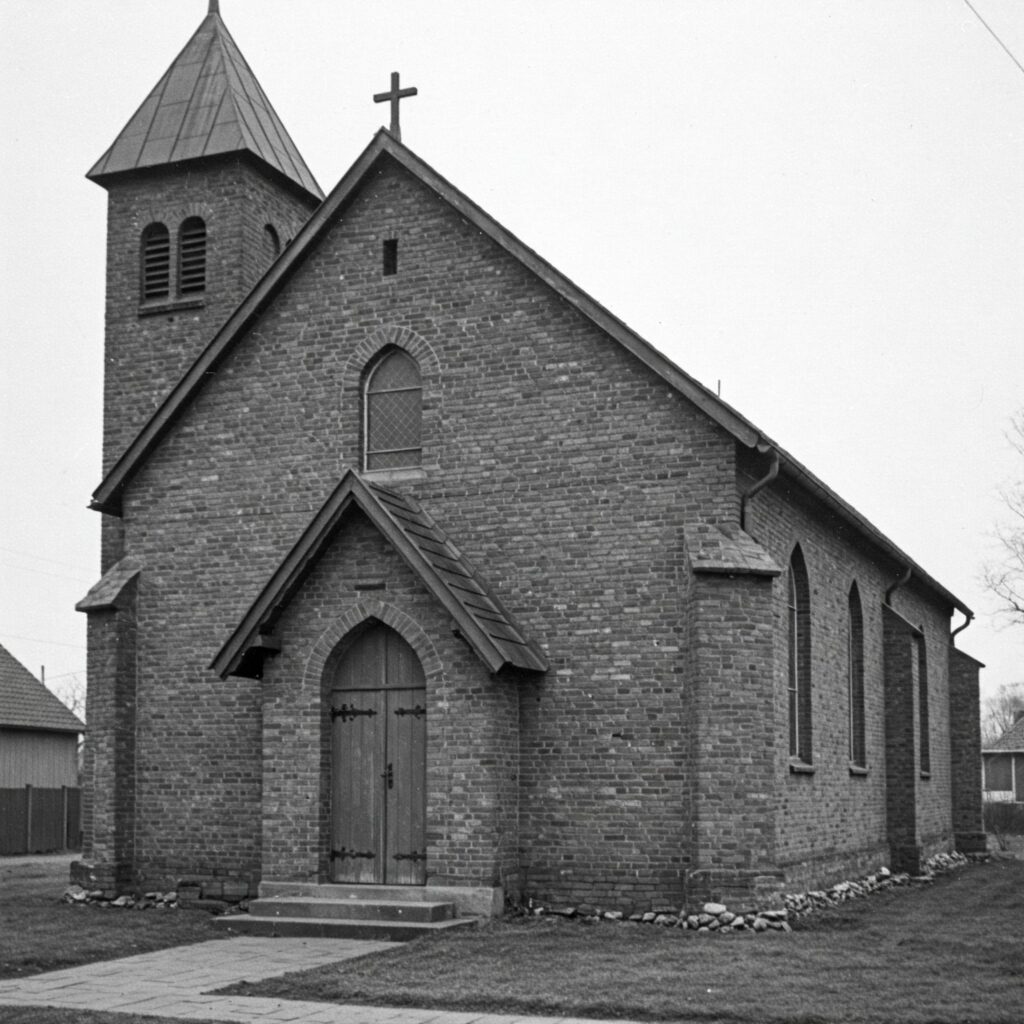
The story of the Church of Saint Helga in Royal is a testament to the transformative power of community, faith, and acceptance. Its journey from a humble beginning as a Lutheran church to a beacon of interfaith unity is a unique chapter in the history of Royal.
The Early Years: A Lutheran Foundation (1885-1902)
The year 1885 marked the genesis of the Church of Saint Helga. Founded as a Lutheran church, it held the distinction of being the first and only church in the small community of Royal. Under the guidance of its first pastor, Sven Jorgeson, Saint Helga’s served not only the residents of Royal but also families from the surrounding outlying areas who would gather every Sunday for services.
The church itself was a simple one-room log cabin, reflecting the pioneer spirit of the time. Initially heated by a fireplace, a donated wood stove later provided warmth during the colder months. The religious practices were strictly Lutheran, and those of other denominations who wished to participate were expected to either convert or simply attend the established services.
The Fire and a Period of Transition (1902-1908)
Tragedy struck in 1902 when the original log cabin church was destroyed by fire. This event, however, did not extinguish the community’s desire for spiritual gathering. For the next several years, services were held in an empty storefront located on Main Street, a temporary space that would unknowingly become the crucible for a profound transformation.
During this interim period, the town of Royal began to experience a significant shift in its demographics. It gradually attracted a diverse influx of artists, musicians, philosophers, writers, and actors from across the United States and even the world, evolving into a burgeoning artists’ colony. This new population brought with it a wide spectrum of beliefs, practices, and rituals, encompassing various religious faiths alongside agnosticism and atheism.
This created a unique and potentially volatile situation for the small town. How could a community as intimate as Royal maintain its cohesion amidst such diverse world views? What could have easily devolved into conflict instead blossomed into what many in Royal would later consider one of the most uplifting spiritual miracles in its history.
Rebuilding and Redefining Faith (1908-1909)
Throughout the years of holding services in the storefront, Pastor Sven Jorgeson diligently worked to raise funds for a new church building. His efforts, which included donations, raffles, church dinners, and a remarkable talent for shrewdly investing in emerging local businesses, proved successful. In April 1908, construction began on a new Saint Helga’s. This structure would be built of brick and feature a steeple and bell, a more permanent and prominent place of worship. Yet, in its design, it remained a plain and simple church.
Sadly, Pastor Sven Jorgeson passed away on July 7, 1908, and would not witness the completion of his vision. The new church was finished in September 1908, but the community now faced the challenge of finding a new spiritual leader.
Shortly after the church’s completion, a pivotal community meeting was held to determine its future. Recognizing the town’s newfound diversity, a groundbreaking decision was made: the Church of Saint Helga would become an all-inclusive church. It would stand independent of any specific denomination, embracing all faiths and beliefs. From this resolution emerged the Church of Saint Helga – The Church of Unconditional Love.
To solidify this new direction, a committee was formed, comprising a representative from every religious faith present in Royal. This diverse group embarked on the task of reviewing the practices, ceremonies, holidays, seasons, and aesthetics of all the represented beliefs. After much thoughtful deliberation and prayer, a Mission Statement was drafted and unanimously approved, laying the foundation for the Church of Saint Helga’s unique identity. This was followed by the creation of two more foundational documents: the Core Beliefs and Values of the Church of Saint Helga, and the Ethics and Morality of the Church of Saint Helga. These three documents became, and remain, the cornerstones of the church’s guiding principles.
William Brandenburg, who had served as the chairman of the Church Committee, was elected as the first Pastor of the newly envisioned church. Another committee was established to design the interior of the church, a particularly complex undertaking given the multitude of religious practices to consider. Throughout this period of planning and transformation, church services continued to be held in the familiar empty storefront, with different family members from various faiths taking turns leading the gatherings.
A New Beginning: The Church of Unconditional Love (1909-1949)
Sunday, January 3, 1909, marked a momentous occasion as the first Sunday service was held in the new Church of Saint Helga. The atmosphere was described as filled with an overwhelming sense of love and inclusion. Over the following months, the church services underwent further evolution, and the interior gradually took shape, reflecting the diverse spiritual landscape of the community.
Under the leadership of Pastor Brandenburg, the Church of Saint Helga and the town of Royal lived up to the ideals enshrined in their three core documents. Unconditional love was not merely a Sunday sermon topic but a lived reality, manifesting in acts of mercy and kindness that extended throughout Royal and its surrounding communities. For the next four decades, the church flourished, gaining recognition both nationally and internationally as a unique model of interfaith harmony.
A New Shepherd and a Quiet Closure (1949-1962)
In 1949, after forty years of dedicated service, Pastor Brandenburg retired. The church community began the search for a new spiritual leader. Their search led them to Pastor Dzef. During a family reunion held in Royal in the summer of 1949, Pastor Dzef attended a service at Saint Helga’s. He was deeply moved by the sense of peace and the inclusive nature of the service, where families from different backgrounds actively participated.
Following a conversation with Pastor Brandenburg and the church committee, Pastor Dzef was offered the position of Pastor, which he gratefully accepted and was ordained a few weeks later. Given the church’s financial situation, the position was unpaid, and Pastor Dzef sought employment and lodging within the community. He found a job at a local restaurant called “The Lunch Box Cafe,” working both at the counter and in the kitchen. This provided him with a unique opportunity to connect with families from Royal and neighboring towns. He rented a small apartment above the restaurant, which became the place where he penned his “From the Book of Dzef to the People of Royal,” further solidifying his connection with the community.
Pastor Dzef remained a guiding presence at Saint Helga’s until the church ultimately closed its doors in 1962. While the reasons for its closure are not explicitly detailed, the legacy of the Church of Saint Helga as a testament to the power of unconditional love and interfaith unity in the face of diversity remains a significant and inspiring part of Royal’s history. The story of the Church of Saint Helga serves as a poignant reminder of the potential for harmony and understanding when communities embrace inclusivity and prioritize love above all else.
The Church of Saint Helga is founded on the core principle of unconditional love, recognizing the inherent wisdom and beauty within various spiritual traditions. Our rituals and practices are intentionally designed to draw upon the rich heritage of Catholicism, Judaism, Lutheranism, Buddhism, Islam, and Spiritualism, weaving them together into a unique tapestry of worship and spiritual growth. This document outlines the key elements of our religious ceremonies and ongoing practices.
I. The Sanctuary and Atmosphere:
Our sacred space is designed to foster a sense of unity and reverence for the diverse paths to the Divine. Key features may include:
A Central Altar: Reminiscent of Christian traditions, the altar serves as a focal point for communal rituals and offerings. It is adorned with symbols representing our core faiths: a cross, a menorah, a statue or image of the Buddha, and artistic representations of Islamic geometric patterns and natural elements.
Open and Inclusive Seating: Traditional pews may be complemented by cushions or open floor space, allowing individuals to choose postures that support their personal comfort and spiritual practice, including meditative sitting.
Sensory Elements: Incense, drawing from Buddhist and other traditions, is often used to create a calming and contemplative atmosphere. Natural light and elements like plants or water features may be incorporated to foster a sense of peace and connection to the natural world.
Eclectic Music: Our services are enriched by a diverse range of music, including Gregorian chants, Lutheran hymns, Jewish melodies (Nigunim), meditative Buddhist chants (Mantras), Sufi-inspired devotional music (Qawwali), and instrumental pieces that evoke spiritual reflection.
II. The Religious Ceremony:
Our central religious ceremony is a multifaceted experience designed to engage the mind, body, and spirit, fostering a deep sense of unconditional love and interconnectedness.
A. Opening:
The ceremony commences with a mindful gathering, incorporating elements from various traditions:
A Call to Presence: This may take the form of a traditional Christian invocation, a Hebrew blessing such as the Shehecheyanu (acknowledging the sacredness of the moment), or a guided mindfulness exercise rooted in Buddhist practices, encouraging attendees to arrive fully in the present.
Silent Reflection: A period of silent meditation or mindful breathing allows for personal introspection and the cultivation of inner peace.
Sacred Readings: Passages are shared from the scriptures and wisdom texts of our core traditions: the Bible, the Torah, the Quran, the Dhammapada, and Spiritualist writings that emphasize love, compassion, and the interconnectedness of all life and the spiritual realms.
B. Readings and Teachings:
The heart of the ceremony involves exploring the theme of unconditional love through diverse lenses:
Interfaith Perspectives: Readings and teachings are carefully selected to highlight the concept of love, compassion, justice, mercy, grace, and spiritual connection as understood within each tradition.
Synthesized Reflection: The spiritual leader (who may draw from the wisdom of any of our represented faiths) offers a homily or reflection that weaves together these diverse perspectives into a unified message centered on universal love, acceptance, and understanding.
C. Rituals and Practices:
Our ceremonies incorporate unique blended rituals that symbolize unity, remembrance, and spiritual connection:
Communion of Love: A ritual reminiscent of the Christian Eucharist and the Jewish tradition of sharing bread and wine (often offered with a non-alcoholic option for inclusivity) is practiced. This act symbolizes shared sustenance, unity within the community, and the acceptance of all. It may be accompanied by a moment of mindful eating, drawing from Buddhist principles of presence.
Illumination of Intentions: Individuals are invited to light candles to represent personal prayers, intentions for themselves and others, or in remembrance of loved ones, both living and those who have passed into the spiritual realm (honoring Spiritualist beliefs and traditions like the Jewish Yahrzeit candle or Christian memorial candles).
Meditative Practices: Guided meditation sessions, drawing from Buddhist mindfulness techniques and Christian contemplative prayer, are integral to our ceremonies. These may be followed by the communal chanting of sacred phrases, mantras, or devotional verses from various traditions, focusing on themes of love, peace, and compassion.
Blessings of Wholeness: Blessings are offered in diverse forms, including Christian benedictions, Hebrew blessings (such as the Priestly Blessing), Buddhist blessings of loving-kindness (Metta), and Islamic Du’a (supplications) for peace, unity, and well-being.
Spiritual Connection: A dedicated time may be set aside for recognizing the presence and influence of the spiritual realm, perhaps through shared inspirational stories, moments of silent reflection to connect with departed loved ones, or readings that explore the Spiritualist understanding of the continuity of life and the interconnectedness of all souls.
D. Music:
Music plays a vital role in creating a sacred atmosphere and deepening the emotional and spiritual experience. Our musical selections are intentionally diverse, aiming to resonate with the spiritual sensibilities of all present.
E. Community and Connection:
Throughout the ceremony, emphasis is placed on fostering a strong sense of community:
Shared Participation: Congregants are encouraged to participate through communal singing, shared prayers, and moments of collective silence.
Welcoming and Inclusive Environment: Our ceremonies strive to be welcoming and inclusive of individuals from all backgrounds and belief systems, united by the common thread of love.
F. Closing:
The ceremony concludes with a final blessing that synthesizes well wishes and peace invocations from our represented faiths. The dismissal encourages attendees to carry the spirit of unconditional love and compassion into their daily lives.
III. Ongoing Practices:
Beyond the central ceremony, the Church of Saint Helga fosters a community that actively engages in practices rooted in our core principle of unconditional love:
Acts of Service: Inspired by the emphasis on compassion and tzedakah (righteous giving) in our traditions, community service initiatives are a vital part of our practice.
Interfaith Dialogue and Learning: We encourage ongoing learning and dialogue about our respective traditions, fostering mutual respect and understanding.
Mindfulness and Contemplative Practices: Regular opportunities for meditation, mindfulness exercises, and contemplative prayer are offered to cultivate inner peace and compassion.
Celebration of Holy Days: While not strictly adhering to the traditional calendars of each individual faith, we may recognize and celebrate key holy days from our represented traditions in a way that highlights the theme of unconditional love and unity.
Spiritual Exploration and Growth: We encourage individual exploration of spiritual practices that resonate with each person, supporting their unique journey towards love and understanding.
Conclusion:
The rituals and practices of the Church of Saint Helga are a dynamic and evolving expression of our commitment to unconditional love. By drawing upon the wisdom and beauty of diverse spiritual traditions, we aim to create a community where all feel welcome, connected, and inspired to embody love in their lives and in the world.
This document outlines the ethical and moral framework that guides the community of the Church of Saint Helga. Rooted in our core beliefs and values, our understanding of right and wrong, and our commitment to living a life of purpose, stems directly from the unconditional love of the Divine.
The Primacy of Love: The Bedrock of Our Ethics
At the heart of our ethical framework lies the Primacy of Love. The boundless and unconditional love of the Divine is not merely a theological concept but the very essence of our moral compass. This love, which knows no exceptions or limitations, serves as the ultimate standard against which all actions, intentions, and decisions are measured. It compels us to move beyond self-interest and embrace a radical inclusivity, recognizing the inherent worth and dignity of every being.
The Divine Image in All: The Source of Our Moral Obligations
Our belief in the Divine Image in All forms the cornerstone of our ethical obligations towards others. Recognizing that every individual is created in the likeness of the Divine imbues each person with intrinsic value and the capacity for love and connection. This understanding demands that we treat all individuals with respect, compassion, and dignity, regardless of their background, beliefs, or life circumstances. It negates any justification for discrimination, prejudice, or the dehumanization of another. Our moral responsibility extends to acknowledging and honoring the sacred spark within each person we encounter.
Love as the Guiding Principle: Practical Application of Our Faith
The principle of Love as the Guiding Principle translates our core beliefs into practical ethical action. It requires us to constantly ask: “What is the most loving response in this situation?” This involves:
Seeking Understanding: Love compels us to listen actively, empathize with different perspectives, and strive to understand the experiences and needs of others.
Uplifting and Supporting: Guided by love, we are called to offer encouragement, practical assistance, and spiritual support to those in need, both within and beyond our community.
Acting with Compassion: Love necessitates a compassionate response to suffering and vulnerability, prompting us to alleviate pain and work towards healing and wholeness.
Choosing Kindness: Even in challenging situations, love encourages us to choose words and actions that are characterized by kindness, patience, and understanding.
Creating a Safe and Inclusive Space: Ethical Imperatives for Our Community
Our commitment to creating a safe and inclusive space is not merely a social aspiration but a direct ethical imperative arising from our core beliefs:
Open Table: Our Open Table reflects the unconditional love of the Divine, extending welcome and acceptance to all who seek connection and spiritual nourishment. Ethically, this means actively dismantling barriers to participation and ensuring that no one feels excluded based on their past, present beliefs, or personal circumstances.
Respect for Diversity: Our Respect for Diversity acknowledges the inherent value in the multitude of human experiences. Ethically, this requires us to actively listen to and learn from different perspectives, challenge our own biases, and foster an environment where all voices are valued and respected.
Commitment to Non-Judgment: Our Commitment to Non-Judgment stems from the understanding that each individual is on a unique spiritual journey. Ethically, this means refraining from condemnation and criticism, and instead offering compassion, understanding, and support. We recognize that judgment can create division and hinder the experience of unconditional love.
Engaging in Service, Spiritual Exploration, and Mutual Support: Ethical Expressions of Our Faith
Our engagement in acts of service, spiritual exploration, and mutual support are not simply activities but ethical expressions of our core values:
Service as an Expression of Love: Our belief in Service as an Expression of Love compels us to actively work for justice, compassion, and the well-being of all. Ethically, this means identifying needs within our community and the wider world and responding with practical action, advocating for the marginalized, and striving to create a more just and loving society.
The Value of Spiritual Inquiry: Our affirmation of The Value of Spiritual Inquiry recognizes the diversity of paths to the Divine. Ethically, this means fostering an environment of intellectual and spiritual freedom, encouraging questioning and exploration, and respecting the individual’s journey of faith, even when it differs from our own.
The Importance of Community Support: Our belief in The Importance of Community Support highlights our interconnectedness. Ethically, this requires us to actively care for one another, offering practical assistance, emotional support, and spiritual encouragement. We recognize our responsibility to build a community where everyone feels seen, valued, and supported.
Fostering Personal Growth, Building Meaningful Connections, and Extending the Transformative Power of Love: Ethical Aims
Our aspirations for personal growth, meaningful connections, and the transformative power of love are ethical aims that guide our individual and collective endeavors:
Growth in Love and Understanding: Our belief in Growth in Love and Understanding calls us to a lifelong commitment to spiritual development. Ethically, this means actively seeking to deepen our capacity for love, empathy, and compassion, and to continuously learn and expand our understanding of ourselves, others, and the Divine.
The Power of Connection: Our recognition of The Power of Connection emphasizes the ethical importance of building authentic and meaningful relationships. This involves cultivating trust, practicing vulnerability, and actively nurturing our connections with one another as sources of strength, encouragement, and shared purpose.
Love as a Force for Transformation: Our belief in Love as a Force for Transformation inspires us to extend the unconditional love we embody to our community and the wider world. Ethically, this means actively working towards healing, reconciliation, and peace, recognizing that love has the power to break down barriers, overcome division, and create a more just and compassionate world.
Conclusion
The ethics and morality of the Church of Saint Helga are inextricably linked to our core belief in the unconditional love of the Divine. This love serves as the foundation for all our values and guides our actions in the world. By embracing the primacy of love, recognizing the Divine image in all, and striving to embody love in all our interactions, we aim to create a community and contribute to a world that reflects the boundless compassion and inclusivity of the Divine. This is an ongoing journey, requiring constant reflection, intentional action, and a deep commitment to living in accordance with the transformative power of love.
The Church of Saint Helga is a welcoming community dedicated to embodying and sharing the unconditional love of the Divine:
The Primacy of Love: The central tenet of our faith is the unconditional and boundless love of the Divine, a love that knows no exceptions or limitations. This love is the foundation of all our teachings and actions.
The Divine Image in All: Every individual is created in the image of the Divine and therefore possesses inherent worth, dignity, and the capacity for love and connection. No person is inherently excluded from the Divine’s love or our community’s embrace.
Love as the Guiding Principle: All actions, teachings, and decisions within the Church of Saint Helga are to be guided by the principle of love, seeking to understand, uplift, and support all.
The Church of Saint Helga strives to create a safe and inclusive space where all individuals, regardless of background, belief, or life circumstance, are embraced with compassion and respect:
Open Table: Participation in our community is open to all who seek connection and spiritual nourishment, regardless of their past, present beliefs, or personal circumstances.
Respect for Diversity: We recognize and value the diversity of human experience, understanding that different backgrounds, beliefs, and life circumstances enrich our community and offer unique perspectives on the Divine.
Commitment to Non-Judgment: We strive to create a space free from judgment and condemnation, recognizing that each individual is on their own unique spiritual journey. Compassion and understanding are paramount.
The Church of Saint Helga engages in acts of service, spiritual exploration, and mutual support:
Service as an Expression of Love: Engaging in acts of service, both within and beyond our community, is a fundamental expression of our love for the Divine and our neighbor. We are called to actively work for justice, compassion, and the well-being of all.
The Value of Spiritual Inquiry: We encourage and support diverse paths of spiritual exploration and understanding. There is no single “right” way to connect with the Divine, and questioning and seeking are valued aspects of faith.
The Importance of Community Support: We believe in the power of mutual support and recognize our interconnectedness. Caring for one another, offering practical assistance, and providing emotional and spiritual encouragement are essential aspects of our community life.
At the Church of Saint Helga we seek to foster personal growth, build meaningful connections, and extend the transformative power of love to our community and the world:
Growth in Love and Understanding: We believe that spiritual growth is a lifelong journey of deepening our capacity to love, understand, and connect with the Divine and one another.
The Power of Connection: Building authentic and meaningful relationships within our community is vital for personal and collective well-being. These connections are a source of strength, encouragement, and shared purpose.
Love as a Force for Transformation: We believe that the unconditional love we embody and share has the power to transform individuals, our community, and the wider world, fostering healing, reconciliation, and peace.
The Church of Saint Helga is a welcoming community dedicated to embodying and sharing the unconditional love of the Divine. We strive to create a safe and inclusive space where all individuals, regardless of background, belief, or life circumstance, are embraced with compassion and respect. Through acts of service, spiritual exploration, and mutual support, we seek to foster personal growth, build meaningful connections, and extend the transformative power of love to our community and the world.
A lot of people are afraid. Is the world coming to an end? Will I have a job on Monday morning? Will my kids be alright? What am I afraid of? My fear is simple: I am afraid to succeed. To go even further I am afraid to do what I want in my life. Yes I know I have been told you can’t do this or you can’t do that. Many of us have been told that. If you listen long enough to people who tell you that you can’t, you start getting an attitude that you can’t. I have been listening to the wrong people.
I have let others shape who I am. Now that I am on my own I am seeing that more clearly. And you what? I have wasted a bunch of years sitting back and doing what everyone else expects me to do. Now I am not going to go and be a hermit. I know I have responsibilities. I have bills to pay. I enjoy my life and I am blessed with all that I have.
But now it is my time.
It is now time for me to be the best possible version of myself.
It will take a bunch of small steps to get there. That is one huge lesson I have learned. You can set lofty goals. Nothing wrong with that. But set smaller goals to get you to that lofty goal. And celebrate those smaller goals. In time that lofty goal will be closer than you think.
Now it is up to you. What do you want to do? Who do you want to be? Go take a walk or quietly meditate. Write things down. Put an action plan together.
Simple Study that word for a few minutes. Let it sink in and meditate on it.
Simple It is a very easy word. Not too hard to spell or pronounce. Only two syllables.
Simple In our world today. In your world today, how simple is it? How would you define simple in our lifestyle. Is simple putting frozen food in the oven for an hour and serving dinner? Is simple following a set of instructions? Is simple a beautiful melody or poem?
Simple Living a simple life. Is that even possible? With all that is thrown at us on daily basis, how can life be simple?
Simple Reflect on these lyrics by Elder Johnson: ‘Tis the gift to be simple, ’tis the gift to be free ‘Tis the gift to come down where we ought to be, And when we find ourselves in the place just right, Twill be in the valley of love and delight.
When true simplicity is gained, To bow and to bend we shan’t be ashamed, To turn, turn will be our delight, Till by turning, turning we come ’round right.
Simple Simple is a balance. There are still responsibilities in your life. Simple is a balance. Progress is still important. Simple is a balance. The interaction of family and friends is all part of life. Simple is a balance.
Simple Simple is as simple does. Think about that. There is no set of instructions on learning to be simple. There is no order form at the bottom of this page for a book on Ten Steps to a Simple Life. What you think simple is may be totally different from what others think. And that is OK! That is the beauty of a simple life.
Simple What is your simple life? How would you describe it? How would you live it? Think about it. But remember to keep it simple.