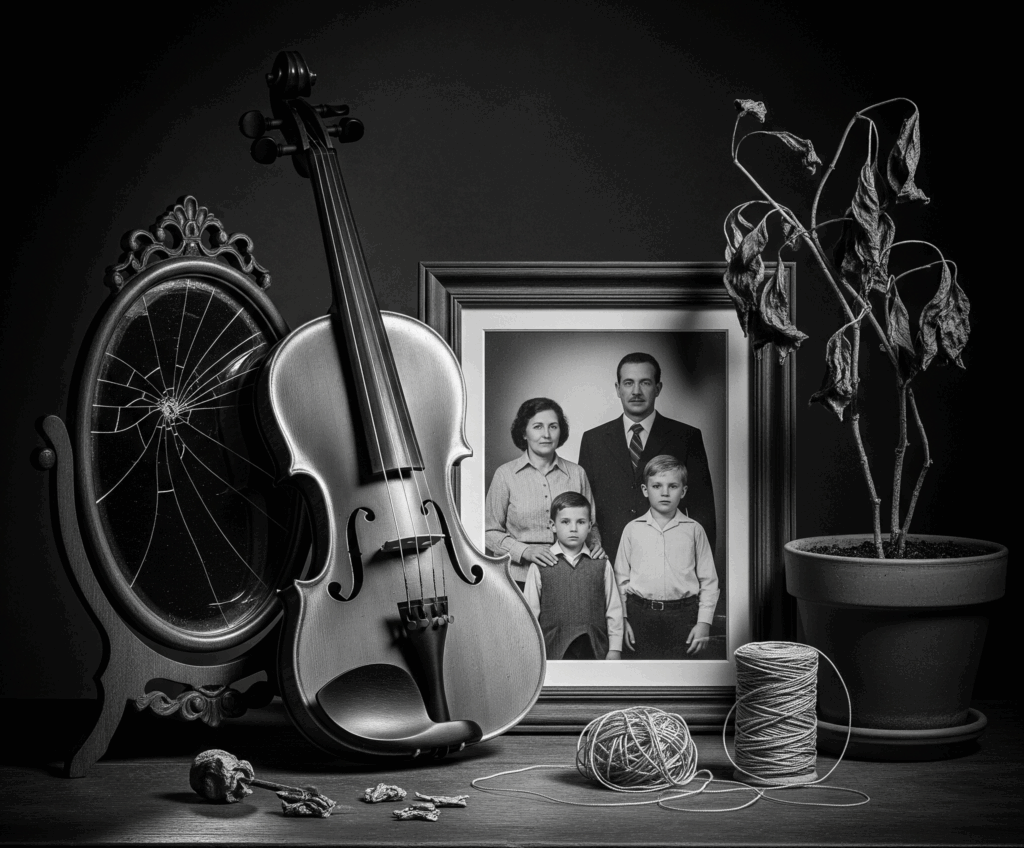
The summer of ’77 had bled into fall, and still, Ethan remained a ghost. Three months had passed since his hurried departure from his parents’ suburban home, and the initial frenzy of the search had begun to wane. For the Milwaukee police, Ethan’s disappearance was still an open and active case, a file gathering dust on a perpetually busy desk. There had been a handful of reported Ethan sightings, each one a flicker of hope quickly extinguished by the cold reality of a false lead. News outlets, once ravenous for any scrap of information, had gradually shifted their focus to fresher tragedies and triumphs. The public, too, had moved on, their collective memory a fickle thing.
But in the meticulously kept suburban home that Ethan had fled, hope, however fragile, still flickered for his parents. The phone calls continued, the hushed inquiries to friends and acquaintances, the desperate scans of every crowd. Yet, beneath the veneer of parental concern, a bitter undercurrent of anger and resentment surged through the family. Fingers pointed, accusations flew, and much of the blame landed squarely on Ethan’s grandfather.
“He encouraged it,” his mother would lament, her voice laced with accusation. “All that talk of music and art. He filled Ethan’s head with nonsense.”
Indeed, Ethan had spent countless hours with his grandfather, lost in a world of shared melodies and profound conversations. His grandfather, a man whose own artistic spirit had been crushed by the relentless demands of survival, saw in Ethan a kindred soul. He recognized the spark, the sensitivity, the innate creativity that set Ethan apart from the pragmatic, money-driven worldview of the rest of the family. He understood, too, how Ethan was suffocating in an environment where the bottom line was the only line that mattered.
“Money equals happiness,” was the mantra drilled into Ethan’s father, a belief forged in the crucible of the Great Depression. Growing up, Ethan’s parents had known deprivation, and that experience had solidified their conviction that financial security was the sole path to contentment. His grandfather, too, had chased that security, moving from one soul-numbing job to another, but in the eyes of his wife, Ethan’s grandmother, it was never enough. The Depression had hardened her, leaving her with a cynical edge and a deep-seated distrust of anything that didn’t contribute to the household coffers. She would openly belittle her husband when he dared to take out his accordion, dismissing his music as a “waste of time” that should be spent finding another job. Eventually, the accordion, a silent casualty of her disdain, found its way to the dusty attic, where it would remain, a forgotten echo of a silenced dream.
Years later, after Ethan’s parents were married and Ethan was a young child, a family meeting was convened. It wasn’t a discussion, really, but more of an ambush. Ethan’s mother, father, and grandmother ganged up on his grandfather, extracting a solemn promise: he would not interfere in Ethan’s upbringing. No talk of his past as a musician, no tales of playing in a band and being a traveling musician, no mention of artistic expression or freedom. The past was to remain buried. The future, they decreed, was about growing up, getting a job, and making money. Happiness, they insisted, would only follow the acquisition of wealth. Money brought happiness. His grandfather, defeated, agreed.
For years, he kept his word. That was until Ethan picked up a violin. His parents, perhaps seeing it as a fleeting childhood phase, allowed it, expecting him to tire of it quickly. But Ethan didn’t quit. He excelled. He found other young musicians, and an instant camaraderie bloomed, a shared language spoken through notes and harmonies. Ethan’s grandfather, witnessing this burgeoning talent, struggled to keep his silence, the promise a heavy weight on his conscience.
As the years passed, Ethan’s passion for music deepened. He attended music camps, played in a youth orchestra, and yearned to do more. He begged his parents for piano lessons, but they flatly refused. His grandfather saw the sadness in Ethan’s eyes, the vibrant spirit dimming, but felt powerless to intervene. Ethan began to withdraw, retreating into himself, spending more time practicing his violin, reading, and dreaming. He built a vivid fantasy world, a sanctuary for his imagination, carefully guarded from the harsh realities of his home life. This was also when the lying began. So deeply did he immerse himself in his invented realities that sometimes, the line between truth and fiction blurred.
Ethan was a gifted writer, his creativity a vibrant force that spilled onto the page. Parent-teacher conferences often highlighted his exceptional talent, urging his parents to encourage his writing. But his parents, clinging to their rigid vision of a “real” career, actively repressed any artistic inclination. This repression, more than anything, fueled Ethan’s need to lie. It was his only way to rewrite the story of his life, to escape the suffocating narrative imposed upon him. This led to a cycle of yelling, lectures, and punishments. Ethan yearned to rebel, but he felt trapped, forced to endure the hostile family environment until the day he could finally escape after high school.