
I may be crazy, but it seems to me that . . .

The jangling repetition of an alarm clock ripped Ethan out of a deep, dreamless sleep. Groaning, he reached across the expanse of the mattress and slapped the alarm off. He turned over, sinking back into the pillow, but something pricked his consciousness. That alarm clock never worked before.
Ethan slowly rolled onto his back and gazed up at the ceiling. Where was the signature patch of mildew? The tell-tale water stains from the leaky roof that had dripped on his first night? Instead, the ceiling was immaculate, the light fixture clean and new.
Ethan heard the first distinct sounds from outside: voices, clear and conversational, followed by the sputtering, ratcheting start of a lawnmower. The noise startled him. He sat up too fast. A wave of dizziness and disorientation washing over him.
Then the room snapped into focus. The walls were freshly painted, the hardwood floors gleaming, cleaned and polished to a rich luster. The furniture, which had been broken relics, was now new, dust-free, and perfectly arranged. Everything was in place. Nothing was lying on the floor.
Ethan stumbled over to the dresser and stared into the mirror. He was wearing pajamas. He definitely hadn’t packed pajamas in his meager luggage. He stared at his reflection. He hadn’t changed. But everything around him had.
Ethan bolted to the window and looked out. The view had been transformed. The houses weren’t dilapidated shells; they were in pristine shape. Freshly painted homes with manicured lawns. This wasn’t a ghost town. The trees were bursting with leaves, flowers bloomed in neat beds, and the distinct, sweet scent of lilacs drifted in the air.
Ethan heard the voices again, closer now. People were outside. Some relaxing on their porches, others walking along the sidewalk. Kids played tag on the grass or rode their bikes. Several cars were parked along the curb, and occasionally, one would drive by.
Ethan stood glued to the glass, his mouth gaping wide. What is going on?
People! The realization hit him with the force of a physical blow. Without stopping to process the bizarre shift, Ethan tore down the stairs and burst out the front door, stopping dead on the porch. The sheer reality of the vibrant, breathing town left him utterly dumbfounded.
“Hey, Ethan! Those are some mighty fine PJs!” a man from the house next door called out, with a friendly, familiar grin on his face. “Don’t you think you should get dressed? You’ll be on the air soon.”
“Yes,” Ethan muttered, still dazed. “On the air.” The phrase meant nothing. He realized the man, and several other people, had stopped what they were doing and were simply staring. Kids pointed and giggled. People across the street paused their conversations to look and gesture.
Feeling a sudden, overwhelming blush, Ethan forced a tight smile, backed awkwardly through the door, and closed it quickly.
The inside of the house was a revelation. The living room and dining room glowed with perfect restoration. The old, dirty furniture looked new and clean. The floors were spotless. Fresh curtains hung on sparkling windows. The bookshelf near the fireplace was full of books, the coffee table topped with a neat stack of magazines.
The dining room looked like a museum exhibit. Corner hutches were filled with delicate dishes and glasses. The chandelier’s crystals shone brightly. A lace tablecloth adorned the six-chaired table, a candelabra sitting ready in the center. The two rooms, impeccable and welcoming, reminded him instantly of his grandfather’s house.
Still reeling, Ethan drifted into the kitchen and stopped dead in his tracks. The linoleum floor was a crisp black and white checkerboard, slippery with a fresh coat of wax under his socks. The wood cabinets were a cheerful mint green, contrasting sharply with the white stove and refrigerator. The countertops were an eye-popping mint green and magenta checkerboard Formica pattern. There was a chrome bread box, a chrome electric coffee pot, a radio, and a chrome toaster. A chrome kitchen table with a bright red Formica top and matching vinyl chairs anchored the room.
He opened the refrigerator; it was fully stocked with food he liked. Drawers and cabinets held new cookware. The pantry was full.
Ethan sank onto one of the kitchen chairs, burying his face in his hands. “What is going on here?” he muttered.
Then a telephone rang.
“This is a dream. I need to wake up,” he repeated, walking toward the annoying ringing.
A large black rotary phone sat in an alcove off the dining room. Ethan stared at it, letting it ring several times before his nerve finally broke through the confusion. He picked up the receiver.
“Hello?”
On the other end, a booming, impatient voice shouted, “Where are you? Your show starts in an hour! There are a few things we have to discuss. Get down here!”
“My show?” Ethan asked weakly.
The voice turned frantic. “I don’t know what you’ve been smoking, and I don’t care, but you better shake that reefer madness out of your head and get to the studio!”
Ethan slowly pieced together a word. “Studio?”
“Yeah, that brown brick building with those four letters on the front window—W-R-Y-L,” the voice roared, adding sarcastically, “Just off Main Street as you pass the Lunchbox Cafe. Now get your ass here, now!”
Ethan slowly hung up the phone. He sat on the couch, stunned. WRYL. Studio. Show.
A cold shower brought Ethan one step closer to reality. The bathroom was white subway tile with navy blue trim in a geometric pattern. All the bathroom fixtures were white. Ethan found a razor, shaving soap, tooth brush and tooth paste in the medicine cabinet. The morning started feeling better.
In the bedroom, Ethan searched for his clothes. They were gone. His cooler, suitcase, and backpack all vanished. Only his violin remained, tucked safely in its case. He pulled out some casual clothes from the closet and drawers – styles that felt decidedly vintage, but well-kept. Looking into the dresser mirror, he adjusted the collar. “Not bad looking,” he admitted to his reflection.
He ran downstairs and stepped outside, turning onto the sidewalk leading to Main Street. He nodded to a man polishing his sedan and exchanged a cordial “Good afternoon” with a woman holding a shopping basket.
As he walked past Anderson’s Hardware Store, Mr. Anderson rushed out, handing Ethan a can of deep forest green paint that Ethan ordered a few days ago.”The perfect color for your porch railing, Mr. Anderson said.
Crossing the street, he passed the Lunch Box Cafe. Pastor Dzef jogged out, presenting Ethan with a thick, cold chocolate malt. They chatted briefly, their familiarity unnerving, before Ethan continued toward his mysterious workplace.
He walked past the Royal Theater, its marquee lights flashing. He turned the corner, his destination a small brick building in the middle of the block. Painted on the front window were the letters W R Y L Studios.
Ethan walked up the short steps to the door and turned around. The town of Royal was alive, thriving, and bustling with activity. This was not a dream.
He turned back to the door, took a deep breath, reached out, turned the knob, and walked into the WRYL studios.
If those who lead you say, “Look, the kingdom is in heaven,” then the birds of heaven will precede you. If they say, “It is in the sea,” then the fish will precede you. Rather, the kingdom is within you and outside you. When you know yourselves, you will be known, and you will know you are children of the living father. But if you do not know yourselves, you live in poverty and you yourselves are the poverty. – Gospel of Thomas
My friends, let us consider these powerful, challenging words: If those who lead you say, “Look, the kingdom is in heaven,” then the birds of heaven will precede you. If they say, “It is in the sea,” then the fish will precede you.”
Now, what is this telling us? Thomas is cautioning us against having a lazy faith, isn’t he? Against the sort of spiritual pipe dream that pushes the glorious promise of the Divine’s reign off into some far-off, cloud-cuckoo land. Some people want to make the Kingdom of the Divine a treasure buried so deep in the sky, or so far beneath the waves, that it’s completely separate from our day to day lives here in Royal, and right in your own home.
They say, “Just wait, brother! Wait ’til you get to heaven, and then you’ll see the Kingdom.” But Thomas says that kind of waiting is a fool’s errand. If it’s only in heaven, then the birds who already fly there have a head start. If it’s only in the sea, the fish are already living in it.
No, my friends, Thomas’s message tells us something infinitely more personal and more urgent.
The passage continues with the very core of this revelation: Rather, the kingdom is within you and outside you.
Did you catch that? The Kingdom isn’t just a physical place you travel to. It’s not a future event you merely wait for. It is a present reality. It’s not just in the church building. It’s within your heart. It’s within your conscience. It’s within the quiet Divine given dignity of your very soul.
And it’s also outside you. It’s in the honest work of your hands. It’s in the fellowship of your family. It’s in the love you show your neighbor down the block. The Kingdom is the active, living presence of the Divine’s will being done right here, right now, through you.
But how do we tap into this incredible power? How do we stop being spiritual paupers and start living as the children of the Kingdom? Thomas tells us the key: When you know yourselves, you will be known, and you will know you are children of the living father.
In our busy modern age, full of new cars, television, and the rush of business, it is tragically easy to lose ourselves. We chase after fleeting pleasures, we worry about what the Joneses have, and we forget to sit down and ask: Who am I, really? Am I living up to the potential the Divine placed inside me? Am I letting the Divine light shine through my actions?
Thomas says, when you truly know yourself – when you strip away the pretenses, the false pride, and the silly vanities – you will discover the divine spark. You will realize you are not a mistake, not a nobody, but a precious, beloved child of the living father. The moment you see that Divine given identity within yourself, you are known by the living father, and the full dignity of the Kingdom is yours to claim.
And what is the alternative? Thomas gives us this solemn warning: But if you do not know yourselves, you live in poverty and you yourselves are the poverty.
Think of that. You may have a comfortable home, a fine job, and money in the bank, but if you do not know the immeasurable wealth of your soul, Thomas says you are living in the deepest, most crushing poverty imaginable. You are poor not because you lack dollars, but because you lack identity. You are the spiritual emptiness itself.
My friends, that is not the life the Divine intends for you. He wants you to wake up. To look inside, to see the image of the Divine that resides there, and to step into the spiritual abundance of the Kingdom – which is within you and outside you.
Don’t wait for the birds or the fish to precede you. Don’t push the Kingdom off to a distant place. Let us resolve today to live as the known, knowing children of the living father, bringing the light of the Divine’s reign into our homes, into our jobs, and into our community – one humble, honest, self-aware step at a time.
Amen.


My opinions may have changed, but not the fact that I’m always right.
WRYL – The Voice of the Great Up North



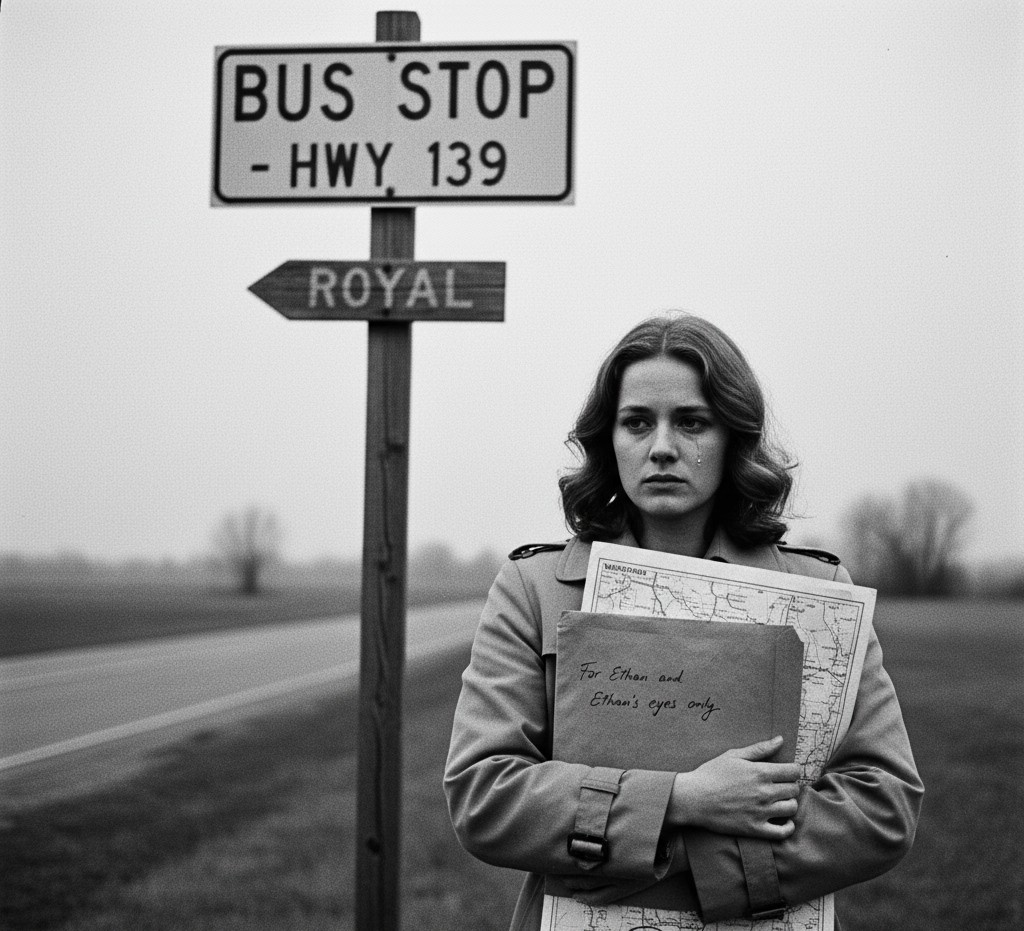
Peggy was a woman of singular focus now. The world outside her quest for Ethan had blurred into a meaningless, frustrating chaos. Her apartment, once a vibrant hub of student life, felt suffocating. Amy and Russel, were keeping her afloat—a fact that only added to the heavy guilt she carried, yet she couldn’t stop. She wouldn’t. Ethan’s face, the haunting melody from the sheet music, and the hollow ache in her heart drove her forward.
Her initial searches were methodical, a desperate grasp for anything concrete. The resources at the University Library and State Government offices yielded next to nothing on the Royal Publishing Company—it seemed to have vanished without a trace, a ghost in the corporate records. The Musician’s Union had equally frustratingly sparse files on Tommy Melk and the Melk Duds, just a few scattered, faded notations confirming their existence as a regional dance band in the late 40s and early 50s.
The true breakthrough, the first thread of the past she could pull, was found buried deep in the local newspaper archives. There, a stark headline jumped out: “Measles Quarantine Locks Down Entire Town Of Royal.” The accompanying photograph was grainy but clear enough to stop Peggy’s breath. It showed a county sheriff, stern-faced, positioning a wooden roadblock across a road. In the background, undeniable even through the newspaper’s poor printing, was state highway marker 139 with a sign below it saying “Royal”, with an arrow pointing to the roadblock.
Peggy snatched a current state road map, her fingers trembling as she searched for the state highway visible in the photo. She found the highway and traced it with her fingers, but the intersection and the road leading away from it—labeled in her mind as the road to Royal—were gone. The town itself was a blank space. “It’s not there”, she thought. “But there it is in the newspaper photo.”
The date on the article was Tuesday April 14,1959. Another clue! What she needed wasn’t a modern road map, but one from that year or before. The university library staff pointed her toward the Geographic Society at the University of Wisconsin, a treasure trove of historical cartography.
The appointment with the Geographic Society was a quiet, almost reverent experience. Spread out on a massive, protective table was a crisp, yellowed 1957 Wisconsin road map. Peggy’s heart was beating intensely. She was able to find state highway 139 and trace its path. And there it was. Not only the intersection, but the clear, black line of the road leading off the highway, culminating in a small, printed dot labeled Royal.
Peggy worked furiously, taking meticulous notes and securing a high-quality copy of the road map. Armed with proof of the town’s location, she began a new round of calls—county offices, local towns in the vicinity, the State Health Department to ask for any records or information related to the measles outbreak. Her life was now a relentless cycle of phone calls, library hours, and sheer exhaustion. Amy and Russel watched with mounting concern as their friend wasted away, her commitment to the search eclipsing all basic needs. The world had become flat and gray, except for that tiny, beckoning dot on the map that was Royal.
A final, desperate call to Ethan’s parents proved fruitless. They knew nothing of a town named Royal, nothing about any secret history. The silence on the other end was heavy with their own confusion and pain.
The next day, when Peggy was at her lowest, the phone rang..
“Hello?” she answered, her voice raspy.
“Peggy? It’s Helen, Ethan’s grandmother.”
A surge of adrenaline snapped Peggy alert. The grandmother sounded tentative, yet resolute. She had something, she said, something that might possibly help. Could you come over?
A couple hours later, Peggy was at the kitchen table in the grandmother’s cozy house, the scent of lavender and black tea was thick in the air. The grandmother slid a large, opened envelope across the table. Written on the front, in faded but deliberate handwriting, were the words: “For Ethan and Ethan’s eyes only.”
“Who… who opened this?” Peggy whispered, looking from the envelope to the grandmother’s tear-filled eyes.
“I did,” she confessed, her voice weary. “I found it with some of his things…Ethan’s grandfather’s things…that I was planning to give away. I couldn’t call Ethan’s father. The pain… it would break him. It would break us all.” She looked directly at Peggy, a plea in her eyes. “Promise me, Peggy. Do not say anything or show anyone the contents.”
Peggy promised. The grandmother rose silently and retreated to the living room, leaving Peggy alone with the envelope.
The contents were a window into a past life: letters, photos, newspaper clippings, and posters. The posters were for Tommy Melk and the Melk Duds, listing performance dates in Royal and other towns. The photos were the most striking—a younger version of Ethan’s grandfather, smiling, his accordion strapped across his chest. More photos showed him playing with Tommy Melk and the Melk Duds.
Then came the letters. They were love letters, passionate and tender, written to him from a woman named Grace. “Grace?” Peggy thought, confusion warring with a sickening realization. Grace was not Ethan’s grandmother’s name. As she continued to flip through the photos, the truth became undeniable. Ethan’s grandfather, young and vibrant, was pictured with Grace—holding hands, embracing, kissing. They were deeply in love.
Peggy had the clues to where Ethan could be—the mapped location of Royal. But the larger, more painful question now loomed: Who was Grace, and what happened to her?
Peggy gathered all the items and placed them back into the envelope. She walked into the living room. Ethan’s grandmother was sitting on the couch, openly weeping, her head in her hands. Peggy sat beside her, gently.
“You’re wondering why I’m showing you all this,” the grandmother said, wiping her eyes. “Why now?”
She took a long, shaky breath and began the story. She spoke of seeing Tommy Melk and the Melk Duds at the Eagles Club, of meeting Ethan’s grandfather, and of falling in love instantly. She spoke of his confession—that he was already in love with another woman, Grace. Then came the fateful night: drinks, dinner, passion, and shame.
“A few weeks later, I found out I was with child,” she whispered. “I contacted him through Tommy Melk. He quit the band. He moved here. We got married, and Ethan’s dad was born.”
The truth, ugly and raw, spilled out. “We were never really in love. He was still in love with Grace. He was still in love with his music.” I had dedicated my life to keeping him away from both Grace and his music, fearing the truth would destroy the family. Years later, after Ethan was born, we cornered Ethan’s grandfather, forcing him to swear he would never play the accordion or speak of music to his grandson.
“That was the second biggest mistake I ever made,” the grandmother said, her voice cracking. “He kept his promise. But I knew he snuck away to play the accordion in the attic. I knew he wasn’t happy.”
She turned, looking straight into Peggy’s eyes. “He is gone now, and so is Ethan, and it is all my fault.” She touched the envelope that was in Peggy’s hands. “Take this. You and Ethan are so much in love. I can see that. Keep it. Show it to him when he comes home. Ethan will understand. I know he will. I can see his grandfather in him, and all Ethan wants is to be happy. Ethan should know.”
The two women stood and hugged, a moment of shared, profound sorrow and sudden, fierce resolve.
“I will find Ethan,” Peggy promised, a small, solitary tear tracing a path down her cheek. “And I will bring him home.”
With the envelope clutched in her arms—containing the painful key to a family secret—Peggy headed to the bus stop. She had the final piece of the puzzle, and a destination. Royal. She knew in her heart now that she would find Ethan.

“Let whoever seeks not cease from his seeking until he finds. When he finds, he will be troubled. When he is troubled, he will marvel and will reign over all.” – Gospel of Thomas
My brothers and sisters. We are gathered here today in the spirit of community and shared purpose. We turn our thoughts to a powerful, ancient saying, one that speaks to the journey of every human soul, regardless of the particular road we walk.
It reads: “Let whoever seeks not cease from his seeking until he finds. When he finds, he will be troubled. When he is troubled, he will marvel and will reign over all.”
This is a profound roadmap for life, a spiritual blueprint for every man and woman trying to make sense of this bustling, modern world of ours. Let us consider its timeless wisdom.
“Let whoever seeks not cease from his seeking until he finds.”
In this prosperous era, with new conveniences and distractions all around us, it’s easy to stop seeking. It’s easy to get comfortable, to settle for the superficial, or to let the noise of the world drown out the quiet voice of truth.
But this teaching is a clear command: Don’t Stop Seeking! What are we truly seeking? We are seeking Meaning. We are seeking Purpose. We are seeking the fundamental, rock-solid Truth that anchors our lives against the tides of change and uncertainty.
It’s the striving of the farmer for a fruitful harvest, the dedication of a mother raising her children with character, the quiet work of a good citizen aiming for an honest life. We must pursue that highest truth with the same tenacity. Don’t let your pursuit be a Sunday hobby; let it be the main work of your life. For the promise is absolute: if you seek, you will find.
“When he finds, he will be troubled.”
Now, this is where the teaching becomes honest and perhaps a little challenging. We might expect a fanfare, a comfortable sense of completion. But the truth is, when a person genuinely finds fundamental truth, they are often troubled.
Why? Because the truth is often a bright, uncompromising light. When that light shines into the shadowed corners of our lives, it reveals things we’d rather not see: our own imperfections, our small dishonesties, the ways we’ve fallen short of the ideal we aspire to.
A man might find the core principle of integrity, and suddenly he is troubled by the shortcuts he’s taken in business. A woman might find the true nature of compassion, and she is troubled by the unkind word she spoke in anger. This “trouble” is not punishment; it is the force of realization. It’s the discomfort of the soul growing, shedding its old, small skin. It’s the necessary shock that precedes any true, lasting change in our character.
“When he is troubled, he will marvel and will reign over all.”
This is the great and glorious payoff, the ultimate destination of the seeking soul. Once we have faced the truth and allowed ourselves to be troubled by it, the next step is marvel.
We marvel not only at the magnitude of the Truth itself—its beauty, its perfect symmetry, its sheer power—but we also marvel at the possibility of our own transformation. We look back at the troubled self, the struggling self, and are filled with gratitude and awe at the strength we found to persevere. This is the moment of spiritual victory, the deep, inner peace that only comes from earning a cleaner conscience.
And this, my friends, leads to the final, magnificent state: to “reign over all.” This doesn’t mean we gain earthly crowns or rule over nations. It means we achieve spiritual dominion.
To reign over all means:
You become a rock in a storm. You become an agent of purpose and goodness in the world. You have found the center of your being, and from that center, you can influence the world around you, not through force, but through the quiet, steady strength of a true, fully realized soul.
So let us all recommit ourselves today to this profound path. Let us seek diligently, accept the trouble of finding, and prepare to marvel, so that we may finally, in the deepest sense, reign.
Amen
I’m not saying I’m lazy, but I have a black belt in napping.
WRYL – The Voice of the Great Up North



Ethan worked until the last vestiges of the gray afternoon finally bled into a deep indigo twilight. The living room, while far from perfect, now felt less like a tomb and more like a room. His muscles ached, but the fatigue was a satisfying kind—the kind earned by honest, hard labor. He paused, wiping a bead of sweat from his forehead with the back of a grime-smudged hand. A faint, tingling warmth now seemed to emanate from the old wood of the floorboards, a barely perceptible thrumming that was a strange comfort.
He moved to a small, built-in shelf near the dusty fireplace, determined to clear it. A book tumbled down as he ran his hand along a row of mildewed, forgotten objects. It wasn’t a book at all, he realized, but a thick photo album bound in faded, burgundy leather. The cover was blank, save for a few dark stains, but the weight of it in his hands felt significant.
Settling into the creaking armchair, Ethan opened the album. The pages were yellowed and brittle, yet the photos held their color with remarkable clarity. He was instantly transported. The first few pages were a collection of domestic scenes: a smiling couple on a porch swing—the very porch outside—and a woman hanging laundry in a backyard that was surprisingly lush and green. He recognized the houses near where he was residing, no longer cloaked in shadows and decay, but vibrant, their paint fresh, their lawns meticulously kept.
The album shifted to the heart of the town. There were photos of Main Street, bustling with life. Men in fedoras and women clutching their purses and shopping bags were everywhere, laughing, stopping to chat. He saw cars with the sleek, rounded bodies of the 1950s parked diagonally along the curb. He recognized the skeletal structures of the buildings he’d walked past earlier, but here they were alive—their windows bright, their shops open and welcoming. A photograph of the Royal Theatre showed a brightly lit marquee advertising “The Blob”.
Finally, he turned a page to find a picture of the WRYL broadcasting studio. It was a small, unassuming building, but the energy of the image was clear and strong. Through a large window, he could see the back of a man seated at a desk, head bent toward a microphone, the “On Air” sign glowing a triumphant red. This was Royal in its prime, a flourishing community, the very picture of the town’s life that had been so cruelly stolen by time.
Ethan leaned back, closing his eyes, letting the images swim behind his lids. He took a deep, deliberate breath and began to imagine. What was it like to live here then?
Outside the house, the spirits of the town began to gather. They were an unseen assembly of shimmering light, a host of faint, human-shaped outlines. Their individual energies didn’t clash but merged together as one, a slow, steady pulse of a communal life force. The energy focused inward, centering on the single point of light that was Ethan in the armchair.
In his mind, Ethan was no longer a solitary occupant of a ghost town. He imagined himself a part of the community. He stood on the sun-drenched sidewalk of Main Street, his clothing somehow fitting the era. The air was cleaner, filled with the faint scent of baking bread and car exhaust. He began walking down Main Street, a smile on his face. He nodded to a man polishing his sedan, exchanged a friendly “Good afternoon” with a woman carrying a shopping basket, and felt a profound sense of belonging. The townsfolk accepted him without question, a friendly face returning home.
As Ethan’s imagined reality grew sharper, the vibrational energy of the spirits grew stronger. The tingling on his skin intensified, an electric buzz of creative power. He walked into Anderson’s Hardware Store and purchased a can of paint—deep forest green, a color that would look perfect on a porch railing. He emerged and crossed the street, entering the Lunch Box Cafe, where he purchased a chocolate malt, thick and cold. He was nourishing the town with his attention, his belief.
He continued his walk, passing the Royal Theater, the marquee lights seeming to flash just for him, and turned the corner. His destination was the small building that held the power of connection for the entire community. He walked up the short steps and reached the door of the WRYL studios.
The collective glow of the spirits, a massive cloud of soft, white, human energy, had now illuminated the night sky over Royal. It pulsed once, a heartbeat of pure, concentrated hope.
Ethan didn’t hesitate. He reached out, turned the knob, and walked into the WRYL studios.
The moment the door closed behind him, the white glow in the sky didn’t fade—it exploded. A massive soundless burst of light erupted, instantly transforming into an awe-inspiring shower of gold, green, red, and blue fireworks. The spectacle was brief but magnificent, a silent proclamation of success, and as the last of the embers floated down, they scattered throughout the town of Royal, settling like glittering pollen on the rooflines and boarded windows, whispering a promise of rebirth.

“Recognize what is in front of your face, and what is concealed will be revealed to you. For there is nothing hidden that will not be disclosed.” – Gospel of Thomas
My brothers and sisters. We turn today to a profound and very timely passage—a clear, bracing challenge from the wisdom of the early followers. It speaks directly to the condition of the human heart in this modern, fast-paced world we find ourselves in.
The words are simple, yet they carry the full weight of spiritual truth: “Recognize what is in front of your face, and what is concealed will be revealed to you.”
Now, my friends, in this era of prosperity and progress—in this atomic age, with our fine automobiles and our television sets—we are surrounded by noise. We are surrounded by things. We spend so much of our time looking outward, looking toward the next great invention, the next big opportunity, the next distraction. And in doing so, we often miss the most crucial thing of all.
Our divine maker is telling us, in no uncertain terms: The truth you seek is not across the sea. It is not hidden at the top of some distant mountain. It is right here. It is what is in front of your face.
Think, for a moment, about our daily life. How often do we pray for a ‘sign’? How often do we ask the divine to give us some blinding revelation, some dramatic voice from the clouds to tell us the path we should take? We look for the sensational!
But our divine maker says, “Look at what is right there.”
What is right there, my friends?
It is the responsibility that you have neglected. It is the kind word to your neighbor that you left unspoken. It is the simple, foundational goodness of the divine creation—the faithful sunrise, the provision of a meal, the loving face of your family. These are the daily mercies, the simple, practical truths of a life lived in accordance with the divine plan.
And yet, we walk past them, our eyes fixed on some grand, imaginary miracle, while the genuine, quiet miracle of living a righteous life slips away. We are so busy chasing the big secrets of the universe that we neglect the open secret of spiritual virtue!
The wisdom here is profound, because it connects two things: the present reality and the eternal revelation. “Recognize what is in front of your face…” This is a call to honesty. It is a demand for introspection. It means looking squarely at the person in the mirror.
If you are concealing a secret dishonesty in your heart—if you are hiding a grudge, nurturing a bitterness, or indulging a secret selfishness—then you cannot see the light. Your own secular dirt blinds your eyes to the truth that is right in front of you.
But, when a person is honest—when he cleans his own heart and says, “I will be truthful about my life right now, this very minute”—then, and only then, does the second part of the promise come true: “…and what is concealed will be revealed to you.”
Why? Because the great spiritual truths of the universe are not hidden from us, they are hidden by us. The veils are not put there by the divine, but by our own pride, our own inattention, our own spiritual sloppiness.
When you purify the lens of your own heart, you suddenly see the divine pattern in the world. You begin to understand the will of the divine, not in a complicated theological textbook, but in the practical necessities of a daily, decent life. The mystery is unlocked not by superior intellect, but by simple, present faithfulness.
And finally, the concluding truth rings out like a bell in the morning: “For there is nothing hidden that will not be disclosed.”
This is a promise and a warning!
It is a promise of hope for the sincere seeker, who knows that if he just keeps working on the small truth in front of him, the great truth will inevitably appear.
But it is also a sober warning for the man who tries to lead a double life. The one who believes his secret failings will stay tucked away in the shadows. My friends, there are no confidential files in the spiritual world. Every word, every deed, every motive will be brought into the light.
Let us resolve to stop looking for complex answers to simple questions.
Let us look honestly at the truth that is right in front of our faces: our duties, our relationships, our present spiritual condition. Let us cast off the foolish notion that the divine great plan is some complicated secret to be unlocked. It is not! It is an open book, and it is written on the fabric of our daily lives.
Be faithful in the small things, and the great things will be revealed to you.
Amen.

Red Berry Workshop
Royal
The Great Up North
© 2026 Red Berry Workshop
Theme by Anders Noren — Up ↑