I may be crazy, but it seems to me that . . .

Author: Jeff (Page 6 of 12)

Scene 4 – The Nietzschean Goldfish Project

Setting: A cramped, cluttered dorm room at the University of Wisconsin – Milwaukee, 1977. Posters of Ingmar Bergman and Bob Dylan compete for wall space.

(SCENE START)

JEFF (O.S.): The University of Wisconsin – Milwaukee served as an unlikely crucible for cinematic genius for five aspiring screenwriters crammed into a dorm room that perpetually smelled of lukewarm coffee and unfulfilled potential. This was the year that Stars Wars premiered, Elvis died and disillusionment simmered. And a group of students, united by their ambition and a shared fascination with a philosophical goldfish named Bartholomew, embarked on a creative journey that was as chaotic as it was compelling.

LEONARD: (Tapping a pen nervously) So, we were at the protagonist’s existential crisis, right? He’s just discovered that his pet goldfish, Bartholomew, believes himself to be Nietzsche reincarnated.

STANLEY: (Grandly) Leonard, darling, this is cinema! We need stakes! Bartholomew can’t just believe he’s Nietzsche. He has to act like Nietzsche! Imagine, a goldfish delivering pronouncements on the will to power! We’ll get Brando for the voiceover!

MARVIN: (Dryly) Brando’s probably busy arguing with his agent about the proper way to eat a sea cucumber.

DEBORAH: (Trying to sound positive) Okay, okay. Let’s not get sidetracked. The core of our story is about alienation in a post-industrial society, seen through the… unique… lens of a philosophical goldfish.

CYNTHIA: (Exhaling an imaginary plume of smoke) It’s all meaningless anyway. We’re all just fleeting moments in the vast, uncaring cosmos. Might as well have the goldfish join a punk rock band.

LEONARD: But the symbolism! The crushing weight of existence reflected in Bartholomew’s tiny, watery eyes!

STANLEY: Symbolism sells art-house tickets, Leonard. Explosions sell popcorn! We need a scene where Bartholomew, in a fit of nihilistic rage, blows up the fish tank!

MARVIN: How exactly does a goldfish blow up a fish tank? Does he swallow a tiny stick of dynamite?

DEBORAH: Maybe it’s a metaphor! For the protagonist’s inner turmoil!

CYNTHIA: Or maybe the goldfish just gets tired of the water. I know I am.

LEONARD: I was thinking more along the lines of Bartholomew having a profound dream sequence where he debates Schopenhauer.

STANLEY: Dream sequences are boring! Unless there are laser beams! Bartholomew could have laser eyes! He’s a super-Nietzsche-goldfish!

MARVIN: We’re supposed to be writing a serious screenplay, not a Saturday morning cartoon.

DEBORAH: Can we at least agree on the protagonist’s motivation? He’s… he’s feeling lost, right? Like he doesn’t fit in?

CYNTHIA: Join the club, sister.

LEONARD: Perhaps his alienation stems from the fact that he’s the only one who can understand Bartholomew’s philosophical pronouncements. He’s trapped in a world of philistines who just see a… fish.

STANLEY: That’s too subtle! What if he’s being chased by a shadowy organization that wants to weaponize Bartholomew’s intellect? Think James Bond meets… Jacques Cousteau!

MARVIN: I’m starting to think Bartholomew should just swim away. End of movie. Everyone goes home.

DEBORAH: No, no, we need a resolution! A moment of catharsis! Maybe the protagonist finally accepts Bartholomew for who he is, Nietzschean tendencies and all.

CYNTHIA: Or maybe Bartholomew realizes the futility of philosophy and just wants a bigger tank.

LEONARD: But the intellectual journey! The exploration of free will versus determinism!

STANLEY: We can have a car chase! With the protagonist and Bartholomew – in a little water-filled contraption – being pursued by black helicopters!

(SFX: Clatter of typewriter increases, then stops abruptly)

MARVIN: I’ve got it. The protagonist is making himself a bagel. He’s feeling particularly angst-ridden. He puts it in the toaster oven…

DEBORAH: Okay…

MARVIN: …but he forgets to take out the foil-wrapped cream cheese he’d stashed inside for later.

(SFX: A loud, unexpected POP followed by a splattering sound)

LEONARD: What was that?!

STANLEY: Did the goldfish finally achieve sentience and detonate?

CYNTHIA: Sounds like reality intruding on our pathetic little drama.

(SFX: Muffled groans)

DEBORAH: Marvin, what happened?

MARVIN: (Deadpan) The existential crisis just got a little… messy. Seems my bagel experienced its own form of explosive disillusionment.

LEONARD: (Sighs dramatically) Even inanimate objects are rebelling against the absurdity of existence.

STANLEY: This is brilliant! We can incorporate this! The exploding bagel is a metaphor for… for… the sudden, chaotic nature of truth!

CYNTHIA: Or maybe it just means Marvin shouldn’t try to toast cream cheese.

DEBORAH: (Wearily) Can we please just go back to Bartholomew?

LEONARD: Perhaps the exploding bagel is Bartholomew’s subconscious cry for help! He’s overwhelmed by the weight of Nietzsche’s philosophy!

STANLEY: We need slow-motion footage of the bagel exploding! With dramatic music!

MARVIN: I just need a sponge.

JEFF (O.S.): And so it went. Five college students, trapped in the amber of their own intellectual pretension, wrestling with grand ideas and exploding breakfast foods. The screenplay, much like their futures, remained a nebulous, slightly sticky mess. But in that cramped dorm room, amidst the angst and the bagel shrapnel, they were, for a brief, fleeting moment, artists. Or at least, they smelled like they were trying to be.  

 (SCENE END)

WRYL Presents

The Wit And Wisdom Of Horace B Miesner

The problem with reality is the lack of background music.


WRYL – The Voice of the Great Up North

More Than One Way to a Well-Tended Garden

I want you to think for a moment about your neighbor, the one who lives just down the road. Maybe you see him out in his garden. You might notice that he plants his tomatoes in a straight row, using a string and a ruler, just as his father taught him. Now, you, on the other hand, might prefer to plant yours in a more circular pattern, or maybe you use a different kind of fertilizer. And both of you will end up with a bountiful harvest, won’t you?

The Creator, in His infinite wisdom, has made each of us unique. He has given us all different talents, different strengths, and yes, different ways of doing things. He has not ordained one single, solitary way to live a good and honest life. The path to a well-tended garden is not carved in stone. The path to a well-kept home is not a single, narrow lane.

And yet, brothers and sisters, we sometimes fall into the trap of thinking our way is the only way. We see our neighbor building a fence and think, “Well, that’s not how I would do it.” We see a sister baking a pie and silently judge her methods, forgetting that the Creator is not concerned with the recipe, but with the love and care that goes into feeding a family.

I’m here to tell you today that it is more than alright for your neighbor to do things differently from you. The Creator’s grace is big enough for both your way and their way. Don’t let a small difference in method cause a large rift in your hearts. We are called not to judge, but to love. And we cannot truly love our neighbor if we are busy measuring their actions against our own.

In fact, I would encourage you to consider this: maybe your neighbor’s way is actually better than yours. Maybe their circular garden plot gets more sun. Maybe their new method of canning preserves is more efficient and saves time for their family. Maybe they have discovered a way to do something that is more cost-effective, allowing them to better provide for their loved ones or to give more generously to the church.

We shouldn’t see these differences as a challenge to our own methods, but as a gift. A gift from our community, a chance to learn and grow. The Creator has blessed us all with a bit of wisdom, and when we combine that wisdom, something truly wonderful can happen.

Think of it like building a new community hall. One man brings his strong hands for the framing. Another brings a knack for mixing the cement just right. A woman in the community knows the perfect way to make the curtains, while a young man has a new, efficient way to wire the lights. Each person’s different approach, when joined together with open hearts, creates a magnificent building that serves the whole community.

My friends, let us be like that. Let us appreciate the different ways we all do the same good work. Let us stop judging our neighbor and instead, look with curiosity and respect. For in embracing each other’s differences, we are not only honoring one another, but we are honoring the Creator who made us all. Amen.

Chapter 12: Goodbye Grandpa – Part 2

College life hit Ethan like a discordant chord. After twelve years of familiar faces in public school, the University of Wisconsin-Milwaukee was a lonely symphony. The first semester, he mostly kept to himself, a silent observer in a bustling hall. His refuge was the practice room, where he wrestled with private violin lessons and a beginner keyboard class. The rest of his schedule was filled with the mandatory core classes: Freshman English, College Algebra, Intro to Mass Communication, and even Folk Dancing – subjects he just wanted to get through.

A harsh truth soon emerged: Ethan wasn’t the violin virtuoso he’d imagined. The college music department was a different league, filled with talent that humbled him. He had a lot to learn and even more to practice.

Home, meanwhile, offered no respite. Though legally an adult in Wisconsin, Ethan was still treated like a child, his efforts at college met with a barrage of negativity. His father, in particular, dismissed his studies as “a waste of time and money.” UWM, a commuter school, meant Ethan drove to campus and back daily, his life resembling a joyless 9-to-5 grind. The crushing weight of loneliness and the constant barrage of disapproval at home began to take a severe toll on his mental health. Ethan was ready to quit.

One afternoon after Ethan’s classes, he was sitting on a couch in the student union trying to figure out what he could do. Staying at home was already a nightmare, and dropping out would only intensify the negative atmosphere. He had nowhere to go. An apartment was out of the question financially, and he didn’t know anyone well enough to find roommates. The stress mounted, anxiety twisting his thoughts and emotions into a suffocating knot. Tears welled up, blurring his vision.

Just then, a young woman walking by noticed his distress. She sat down beside him, a kind smile on her face. “Hi, I’m Peggy,” she offered, her voice soft and reassuring. “I’ve seen you with your violin and heard you pounding away on the piano in the practice rooms.”

Ethan, still teary, mumbled his name. Peggy asked if there was anything she could do to help. He almost said no, but something in her eyes, a genuine warmth, made him pause. He looked at her, feeling an unexpected ease, and then, the words tumbled out. He told her everything, the loneliness, the pressure, the suffocating expectations. Peggy listened, her attention unwavering, making him feel truly heard for the first time in a long time. When he finally finished, a wave of relief swept over him.

Peggy looked at him, a gentle smile returning to her face. “Are you hungry?” she asked. “I make a great mac and cheese. I’ve got some tea and a little wine if you’re interested.” She paused, her gaze steady. “You can’t do this alone, Ethan. You need some friends.” She stood up, extending her hand.

Ethan took it, and they began to walk. Then, he stopped. “Bessie,” he blurted out.

Peggy looked at him, confused. “Who’s Bessie?”

“My car,” Ethan explained, feeling a blush creep up his neck. “I know it sounds silly, but I named my car Bessie.”

Peggy stopped dead in her tracks, her eyes wide with amazement. “You have a car!?”

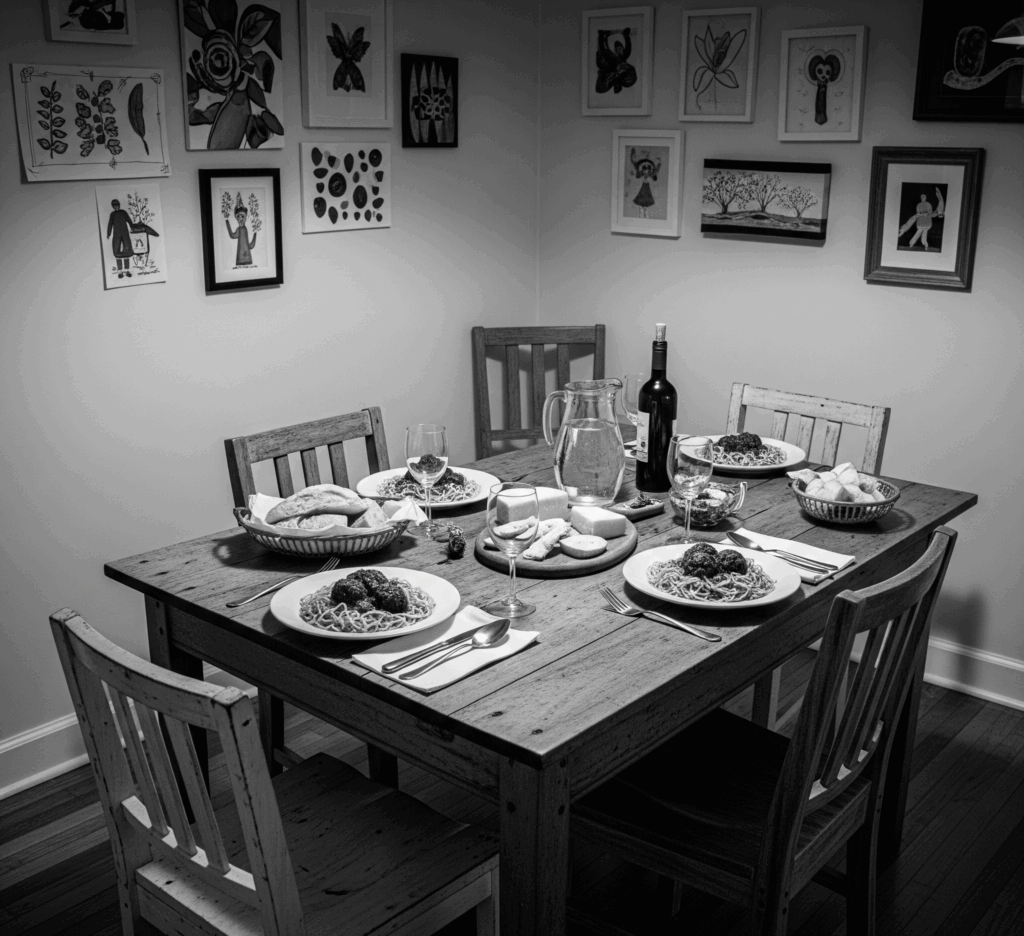
Minutes later, they were at a small, family-owned grocery store. Pooling their meager funds, they debated dinner options. “We should have something special,” Peggy declared. “I know let’s do spaghetti and meatballs…and get a loaf of Italian bread and some cheese.”

“Sounds perfect!” said Ethan. 

“Maybe some gelato for dessert,” Peggy added. “I think we have enough money.”

“Gelato?” Ethan’s eyes widened. “I’ve never tried it.”

“Everyone in the house loves gelato!” Peggy exclaimed.

“Everyone?” Ethan inquired.

“My roommates,” Peggy clarified. “You’ll really like them, and they’ll definitely like you.”

“Roommates, hmmm?” Ethan murmured to himself, a flicker of something new – anticipation? – stirring within him.

Ethan pulled Bessie in front of a grand, old Victorian house, subdivided into a duplex. Peggy directed him to drive around to the alley and park behind the house. “Don’t worry,” she assured him, “this is our parking space, and now we have a reason to use it.” Peggy was in a remarkably good mood, humming a cheerful tune. Ethan watched her, captivated by her unburdened happiness, a feeling he yearned to experience.

They ascended the back steps to the upper duplex, laden with groceries, backpacks, and Ethan’s violin. At the door, they were greeted by Amy, a self-proclaimed “hippie wannabe” who dressed the part but possessed the suburban directness Ethan was accustomed to. She was polite, expressed her happiness to meet Ethan, and was visibly thrilled about Peggy bringing home dinner.

The third roommate, Russel, entered the living room. Ethan braced himself, expecting the typical jock persona he’d encountered throughout high school. But Russel, to Ethan’s surprise, was an artist. He enthusiastically showed Ethan sketches for a stage play, asking for his opinion on stage designs. Peggy, however, intervened, suggesting they give Ethan a chance to settle in first.

Amy led Ethan to the living room couch. He gazed around, marveling at the abundance of framed and unframed artwork adorning the walls – truly amazing pieces. Amy then asked about his musical preferences. When Ethan replied “most anything,” she seemed a little annoyed. “Everyone has their particular type of music that fits their personality,” she stated, “everyone is unique.” Amy stood up, studying Ethan intently. “You seem to be in pain,” she observed. She walked to a shelf filled with record albums, selected one, and placed it on the stereo. The melancholic strains of Samuel Barber’s “Adagio for Strings” filled the room. She sat back down beside him. “This is how I see you now,” she said, her voice soft but firm, “but this isn’t the real you. The real you is buried under a whole mess of unnecessary bullshit. You need to toss the bullshit.”

Peggy, stepping in from the kitchen, gently chided Amy. “Cut him some slack, Amy, don’t scare him off. He’s a nice guy.” She smiled reassuringly at Ethan before returning to her cooking.

Russel joined them in the living room, settling into a chair opposite the couch. He began asking Ethan questions, seemingly genuinely interested in his answers. Amy, too, listened intently, clearly trying to piece together who Ethan truly was.

Dinner was fantastic, the spaghetti and meatballs surprisingly delicious. Russel opened a bottle of wine, and they shared it, a sense of camaraderie blooming around the table. After the meal, Ethan helped Peggy with the dishes. He thanked her for the wonderful dinner and the great time but said he should probably head home.

Peggy turned to him, her expression firm. “Nonsense, you’re not going anywhere. Why go home? Why go back to all that stress and negativity? You can stay here.”

“But my parents will wonder where I am,” Ethan protested weakly.

Peggy looked him directly in the eyes. “Do you really want to go home, Ethan? Think before you answer.”

Ethan closed his eyes, his thoughts a chaotic whirlwind. The stress he’d tried to suppress surged back, and he felt tears beginning to fall again. Peggy gripped his arms. “Ethan!” she exclaimed.

He opened his eyes. Everyone was in the kitchen now, all eyes on him. Ethan looked at Amy and Russel, then his gaze settled on Peggy. His voice, barely a whisper, was laced with raw desperation. “I never want to go back home.”

Dear Shirley

Dearest Shirley,
I’m writing to you today with a pickle that’s more sour than a lemon in a lime factory. I’m a strapping young lad of 25, and I’ve fallen head over heels for a woman, let’s call her “Doris,” who’s, shall we say, enjoying her golden years at a vivacious 60. She’s smart, funny, beautiful, and makes a mean hot dish. We’re madly in love, and our private life is, well, blissful.

The problem, Abby, is the public life. Every time Doris suggests we go out – to a restaurant, a movie, even just a walk in the park – my stomach does more flips than a professional gymnast. I start spouting excuses faster than a politician before an election: “Oh, my car’s making a funny noise,” “I suddenly have to reorganize my sock drawer,” “My pet rock needs emotional support.” You name it, I’ve used it.

I’m terrified people will stare. I’m convinced my friends will point and whisper, “Look, there’s, let’s call me Henry, dating his grandma!” I know it’s irrational, and Doris is amazing, but the thought of those judging eyes just paralyzes me. I’m worried she’s going to get fed up with my hermit-like tendencies and ditch me for someone who isn’t afraid of daylight. How can I get over this ridiculous embarrassment and proudly show off the incredible woman I love?

Sincerely,
Closeted Casanova


Dear Closeted Casanova,
Oh, honey, you’ve got it bad, but not in the way you think! Your heart is singing, but your brain is stuck in a middle school cafeteria. Let’s unpack this fear of yours, shall we?

First off, congratulations on finding love! It sounds like you and Doris have something truly special, and that’s worth more than all the whispered gossip in the world. Now, about those whispers…

Here’s a dose of reality: Most people are too wrapped up in their own lives (and their own embarrassments, believe me) to care all that much about your age-gap romance. And the ones who do stare or whisper? Bless their cotton socks, they’re probably just jealous! Jealous that you’ve found genuine happiness, jealous that Doris is still so vibrant, or maybe just jealous they didn’t think of reorganizing their sock drawer.

Your friends? If they’re truly your friends, they’ll be happy for you. Anyone who mocks you for loving someone wonderful, regardless of age, isn’t much of a friend anyway. You’re 25, not 15. It’s time to realize that your worth isn’t determined by the approval of a few snickering acquaintances.

Here’s your prescription for public confidence:

  • Take baby steps: Start small. Instead of a fancy restaurant, try a quiet coffee shop or a walk in a less crowded park. Get comfortable being seen together in low-pressure situations.
  • Own it! When you’re out, hold Doris’s hand, put your arm around her. Act like she’s the most wonderful woman in the world (because she is!). Your confidence will be contagious and will signal to others that your relationship is nothing to gawk at.
  • Practice your comeback lines: If someone does make a rude comment (unlikely, but hey, be prepared!), have a few witty retorts ready. Something like, “Love doesn’t have an expiration date!” or “She’s got more life in her little finger than most people have in their whole bodies!”
  • Focus on Doris: When you’re out, instead of scanning for judging eyes, focus on her. Look at her, listen to her, enjoy her company. When your attention is on the person you love, the rest of the world fades away.
  • Talk to Doris: She knows you love her, but she’s probably feeling a little confused, maybe even hurt, by your constant excuses. Be honest with her about your fears. A supportive partner can do wonders for your confidence.

Closeted Casanova, life is too short to hide the love you’ve found. Doris deserves to be shown off, and you deserve to enjoy her company wherever you please. So, dust off your going-out shoes, take Doris by the hand, and stride out into the world. You’ll be surprised how quickly those imaginary stares disappear when you realize the only opinion that truly matters is your own (and Doris’s, of course!).

Go forth and be fabulous!

Warmly,
Shirley

Public Service Announcement From WRYL

Things Our Mother Taught Us

My Mother taught me about Time Travel

If you don’t straighten up, 
I’m going to knock you into the middle of next week!”


This has been a public service announcement from WRYL

The Voice of the Great Up North

Chapter 11: Goodbye Grandpa – Part 1

The summer of ’77 had bled into fall, and still, Ethan remained a ghost. Three months had passed since his hurried departure from his parents’ suburban home, and the initial frenzy of the search had begun to wane. For the Milwaukee police, Ethan’s disappearance was still an open and active case, a file gathering dust on a perpetually busy desk. There had been a handful of reported Ethan sightings, each one a flicker of hope quickly extinguished by the cold reality of a false lead. News outlets, once ravenous for any scrap of information, had gradually shifted their focus to fresher tragedies and triumphs. The public, too, had moved on, their collective memory a fickle thing.

But in the meticulously kept suburban home that Ethan had fled, hope, however fragile, still flickered for his parents. The phone calls continued, the hushed inquiries to friends and acquaintances, the desperate scans of every crowd. Yet, beneath the veneer of parental concern, a bitter undercurrent of anger and resentment surged through the family. Fingers pointed, accusations flew, and much of the blame landed squarely on Ethan’s grandfather.

“He encouraged it,” his mother would lament, her voice laced with accusation. “All that talk of music and art. He filled Ethan’s head with nonsense.”

Indeed, Ethan had spent countless hours with his grandfather, lost in a world of shared melodies and profound conversations. His grandfather, a man whose own artistic spirit had been crushed by the relentless demands of survival, saw in Ethan a kindred soul. He recognized the spark, the sensitivity, the innate creativity that set Ethan apart from the pragmatic, money-driven worldview of the rest of the family. He understood, too, how Ethan was suffocating in an environment where the bottom line was the only line that mattered.

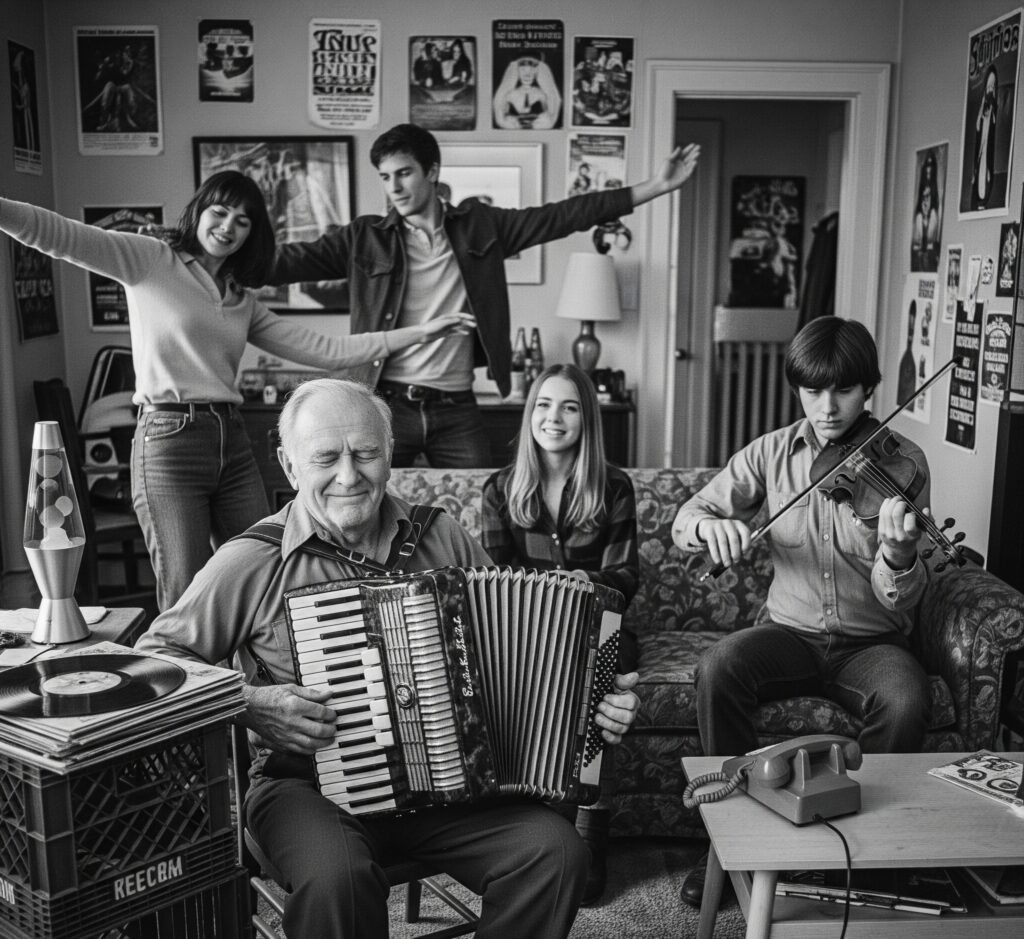
“Money equals happiness,” was the mantra drilled into Ethan’s father, a belief forged in the crucible of the Great Depression. Growing up, Ethan’s parents had known deprivation, and that experience had solidified their conviction that financial security was the sole path to contentment. His grandfather, too, had chased that security, moving from one soul-numbing job to another, but in the eyes of his wife, Ethan’s grandmother, it was never enough. The Depression had hardened her, leaving her with a cynical edge and a deep-seated distrust of anything that didn’t contribute to the household coffers. She would openly belittle her husband when he dared to take out his accordion, dismissing his music as a “waste of time” that should be spent finding another job. Eventually, the accordion, a silent casualty of her disdain, found its way to the dusty attic, where it would remain, a forgotten echo of a silenced dream.

Years later, after Ethan’s parents were married and Ethan was a young child, a family meeting was convened. It wasn’t a discussion, really, but more of an ambush. Ethan’s mother, father, and grandmother ganged up on his grandfather, extracting a solemn promise: he would not interfere in Ethan’s upbringing. No talk of his past as a musician, no tales of playing in a band and being a traveling musician, no mention of artistic expression or freedom. The past was to remain buried. The future, they decreed, was about growing up, getting a job, and making money. Happiness, they insisted, would only follow the acquisition of wealth. Money brought happiness. His grandfather, defeated, agreed.

For years, he kept his word. That was until Ethan picked up a violin. His parents, perhaps seeing it as a fleeting childhood phase, allowed it, expecting him to tire of it quickly. But Ethan didn’t quit. He excelled. He found other young musicians, and an instant camaraderie bloomed, a shared language spoken through notes and harmonies. Ethan’s grandfather, witnessing this burgeoning talent, struggled to keep his silence, the promise a heavy weight on his conscience.

As the years passed, Ethan’s passion for music deepened. He attended music camps, played in a youth orchestra, and yearned to do more. He begged his parents for piano lessons, but they flatly refused. His grandfather saw the sadness in Ethan’s eyes, the vibrant spirit dimming, but felt powerless to intervene. Ethan began to withdraw, retreating into himself, spending more time practicing his violin, reading, and dreaming. He built a vivid fantasy world, a sanctuary for his imagination, carefully guarded from the harsh realities of his home life. This was also when the lying began. So deeply did he immerse himself in his invented realities that sometimes, the line between truth and fiction blurred.

Ethan was a gifted writer, his creativity a vibrant force that spilled onto the page. Parent-teacher conferences often highlighted his exceptional talent, urging his parents to encourage his writing. But his parents, clinging to their rigid vision of a “real” career, actively repressed any artistic inclination. This repression, more than anything, fueled Ethan’s need to lie. It was his only way to rewrite the story of his life, to escape the suffocating narrative imposed upon him. This led to a cycle of yelling, lectures, and punishments. Ethan yearned to rebel, but he felt trapped, forced to endure the hostile family environment until the day he could finally escape after high school.

Scene 3 – Lights, Camera, Indecision!

INT. ABANDONED WAREHOUSE – DAY

The air in the cavernous, dusty warehouse is thick with the smell of mildew and ambition. Motes of dust dance in the shafts of sunlight piercing the grimy windows. It’s a less-than-ideal film set, but it was free.

JEFF (V.O.) voice sighs, a familiar prelude to impending chaos.

JEFF (V.O.) Ah, the abandoned warehouse. The classic backdrop for cinematic breakthroughs, or in our case, the stage for a collective nervous breakdown. With Super 8 cameras clutched in trembling hands, our intrepid filmmakers were about to discover that translating grand ideas into actual imagery without the benefit of dialogue was, well, a silent scream in itself.

STANLEY wearing a slightly too-large director’s beret, is attempting to set up a rickety tripod, struggling with its obstinately disobedient legs. LEONARD paces a tight circle, muttering to himself, occasionally glancing at a small, tattered book. MARVIN leans against a graffiti-covered wall, arms crossed, looking utterly unimpressed. DEBORAH, ever the picture of organized chaos, consults a storyboard meticulously drawn on graph paper. CYNTHIA, meanwhile, is already deep into an imaginary cigarette, exhaling a visible cloud of nothing.

STANLEY (Frustrated grunt) This tripod has the structural integrity of a wet noodle! How am I supposed to capture the soaring spirit of man against the backdrop of urban decay with this… this contraption?!

DEBORAH (Calmly) Stanley, maybe focus on the narrative. My storyboard has a sequence here, frame 32, where our protagonist, representing the universal human struggle, gazes out at a desolate landscape. It’s meant to convey hope, or perhaps the yearning for it.

LEONARD (Stopping his pacing abruptly) But how do we convey yearning without a soliloquy? Or even a subtle sigh? Perhaps a slow zoom on his trembling lower lip? The visual manifestation of existential dread! It needs to be precise! We could use a slightly out-of-focus shot to symbolize the blurred lines of reality!

MARVIN (Without moving) Or you could just film him looking constipated. Pretty sure that covers most human struggles. And it’s universally understood.

Cynthia lets out a dry, silent chuckle, her imaginary cigarette nearly burning down to her fingertips.

CYNTHIA I like the idea of the desolate landscape. Especially if it’s just a pile of discarded industrial refuse. That screams “yearning” to me. Or just “landfill.” Close enough.

STANLEY (Straightening his beret with a flourish) No, no, no! Desolation is good, but it needs a hook! Imagine: our hero, standing on the precipice of a vast, empty expanse, then… a single, golden disco ball, glinting in the distance! Symbolizing the fleeting nature of joy in a post-modern world! And then he points at it! With conviction!

LEONARD (His voice rising in pitch) A disco ball? Stanley, we are trying to convey the ineffable tragedy of the human condition, not choreograph a B-movie musical! The image must be sparse! Stark! Like a single, flickering candle flame in a vast, cold universe! To represent the fragile grasp on sanity!

DEBORAH (Trying to mediate) Perhaps we could blend elements. The desolate landscape, yes, but then a subtle gesture. A shrug. A turning away. The quiet despair of a soul adrift.

MARVIN (Eyes half-closed) Or just a close-up of a broken promise. Maybe a cracked coffee mug. Everyone gets that.

JEFF (V.O.) It became clear, rather quickly, that each of them was attempting to make their own Super 8 film, simultaneously, on the same strip of celluloid. A kind of cinematic discord, without the benefit of actual sound.

Stanley, now visibly frustrated, throws his hands up.

STANLEY This is impossible! How do you tell a story without telling a story?! It’s like trying to make spaghetti without noodles! Or a relationship without emotional baggage!

LEONARD (Suddenly still, a look of dawning horror on his face) Wait. Stanley, you might be onto something. Your disco ball… Cynthia’s escaping figure… Deborah’s yearning… Marvin’s broken promise… my… my crumbling sanity…

He looks around at the group, a new light in his eyes.

LEONARD It’s all… it’s all us. This film isn’t about some universal protagonist. It’s about our collective neuroses! Our disillusionment! Our anxiety!

DEBORAH (Slowly, understanding dawning) A silent narrative of… shared confusion. The imagery of us, trying to figure this out.

CYNTHIA (Nodding, taking a deep, satisfied imaginary drag) The endless struggle. The vague sense of not knowing what the hell you’re doing. Yeah. That’s a story.

MARVIN (A rare, almost imperceptible smile) And it doesn’t need sound. Because no one’s listening anyway.

Stanley, after a moment of stunned silence, snaps his fingers.

STANLEY Brilliant! A meta-narrative! We’ll film ourselves trying to make the film! The director, consumed by his own grandiosity! The intellectual, drowning in theoretical quicksand! The pragmatist, clinging to her schedule! The cynic, observing it all with weary amusement! The… the phantom smoker, perpetually anticipating the next disaster!

LEONARD (A glimmer of genuine excitement, despite his inherent nervousness) Yes! A visual symphony of ineptitude! We can start with a shot of the tripod collapsing! Symbolizing the fragility of our ambitions!

DEBORAH (Picking up her notebook, a new resolve in her eyes) And then shots of us pacing, arguing, looking utterly lost. The raw, unfiltered reality of an embryonic creative process!

CYNTHIA (Grinning faintly) And then me, lighting up. A little visual punctuation for moments of profound existential dread.

Marvin just nods, a glimmer of approval in his eyes. For the first time, all five of them seem to be on the same, slightly absurd, page.

JEFF (V.O.) And so, after weeks of existential angst and theoretical wrangling, they had their story. It wasn’t about a train, or a milkman, or even a nuanced exploration of feminism. It was about them. Five hapless souls, trying to make sense of a world that increasingly felt like a silent film, and realizing that perhaps the most profound narrative of all was the one they were living, one botched take at a time. The Super 8 camera clicked to life, ready to capture the glorious, unadulterated chaos of their first foray into filmmaking.

WRYL Presents

The Wit And Wisdom Of Horace B Miesner

The road to success is paved with good intentions…

and a whole lot of caffeine.


WRYL – The Voice of the Great Up North

Dear Shirley

Dear Shirley,
I’m a teenage guy named Edwin, and I’m writing to you because I’m really confused about girls, especially when it comes to knowing if they want to be kissed. There’s this girl I really like, and I feel like we have a good connection, but I’m terrified of making a move and getting it wrong.

How do you even know if a girl wants you to kiss her? Is there something specific she says or does that’s a signal? I’ve heard about “body language,” but I don’t really know what to look for. I’m so scared of trying to kiss her and having her push me away, or worse, laugh at me and make fun of me to her friends. That would be completely mortifying.

Also, how can I tell if a girl really likes me, beyond just being friendly? Sometimes I think a girl is into me, but then she acts the same way with all her other guy friends, and I get confused. I don’t want to misread things and end up embarrassing myself.

Any advice you can give would be a huge help. I just want to understand things better so I don’t mess up.

Sincerely,
Confused Edwin

Dear Confused Edwin,
Thank you for your honest letter. It takes courage to ask these kinds of questions, and you’re certainly not alone in feeling confused about reading signals. It’s a tricky area, especially in the teenage years, but there are definitely ways to navigate it with more confidence.

First, let’s talk about knowing if a girl wants to be kissed. You’re right, body language is a big part of it, but it’s not always a flashing neon sign. Here are some things to look for, and remember, it’s often a combination of these, not just one:

  • Proximity and Personal Space: Is she leaning in when you talk? Does she find excuses to be physically close, like brushing your arm or letting your shoulders touch? If she’s consistently closing the physical gap between you, that’s a good sign she’s comfortable and possibly interested.
  • Eye Contact: Does she hold your gaze for more than a quick glance? Does she look at your lips when you’re talking, then back to your eyes? Prolonged, intense eye contact can be a strong indicator of interest.
  • Touch: Does she initiate light, casual touches, like touching your arm when she laughs, or playfully nudging you? Pay attention to how she reacts if you lightly touch her arm or hand – does she pull away, or does she reciprocate or linger?
  • Mirroring: People often unconsciously mirror the body language of someone they’re attracted to. If you lean in, does she? If you smile, does she smile back genuinely?
  • Lingering Goodbyes: Does she prolong goodbyes, finding reasons to stay and talk a little longer, or seem reluctant to leave?
  • Verbal Cues: Sometimes, it’s not just what she says, but how she says it. Does she compliment you? Does she ask personal questions about your feelings or your life? Does she hint at wanting to spend more time alone with you?

Now, for the big one: the kiss. Even with all these signals, there’s no 100% guarantee. The best approach is to create an opportunity for a kiss, rather than just going for it out of the blue. When you’re in a moment that feels right – maybe you’re alone, you’ve had a good conversation, and you’re feeling those positive signals – you can try:

  • Leaning In Slowly: Lean in slightly, making eye contact. Give her a chance to lean in too, or to pull back. If she leans in, that’s a very strong signal.
  • Looking at Her Lips: Briefly shift your gaze from her eyes to her lips, then back to her eyes. This is a subtle way to communicate your intention without saying a word. If she mirrors this, or her eyes linger on your lips, you’re likely in the clear.
  • Asking (If You’re Still Unsure): While it might feel less romantic, sometimes direct communication is the kindest and clearest. A soft “Can I kiss you?” or “I’d really like to kiss you right now” can remove all doubt. If she says yes, great! If she says no, or hesitates, you’ve avoided an awkward situation, and you’ve shown respect for her boundaries. Her reaction will tell you a lot.

As for telling if a girl really likes you beyond just being friendly, here are some additional signs:

  • Prioritizing You: Does she make time for you, even when she’s busy? Does she suggest spending time together one-on-one, rather than always in a group?
  • Deep Conversations: Does she share personal thoughts, feelings, or vulnerabilities with you? Does she listen intently when you share yours?
  • Remembering Details: Does she remember things you’ve told her, even small details, and bring them up later? This shows she’s truly listening and cares about what you say.
  • Exclusivity (Subtle): While she might be friendly with other guys, does she treat you differently? Does she seem more engaged with you, or seek you out specifically in a group setting?
  • Nervousness/Blushing: Sometimes, a girl who likes you might get a little shy or blush around you, especially if you compliment her or pay her special attention.

Edwin, the fear of rejection is completely normal. Everyone experiences it. But remember, a respectful approach, where you pay attention to her signals and give her space to respond, is always the best way. If a girl pushes you away or laughs, it says more about her immaturity than it does about you. You’re showing maturity by wanting to understand and respect her.

Keep being yourself, be genuine, and pay attention. You’ll get the hang of it.

Warmly,
Shirley

Share a Smile

It’s a gift to gather here today, to share in this space, and to reflect on something truly profound, yet often overlooked in its simplest form: love. We hear about grand gestures, sweeping romances, and world-changing movements, and indeed, these are expressions of love. But what about the quiet, everyday acts? What about the love that begins with just a simple smile?

Imagine this: you’re walking down the street, perhaps lost in thought, burdened by the day’s worries. And then, a stranger passes by, catches your eye, and offers a genuine, warm smile. For a fleeting moment, the weight lifts. A connection is made. That simple smile, costing nothing, can truly change everything. It’s a tiny spark, but sparks can ignite fires.

From these small sparks, these simple acts of kindness, something truly remarkable begins to grow. A helping hand, a listening ear, a kind word – these aren’t just polite gestures. They are seeds of compassion. They lead to bigger acts of love, to deeper understanding, and to a profound sense of connection with those around us.

Yet, often, we find ourselves in places of misunderstanding, even division. Why? So often, it stems from the fear of the unknowing. We encounter someone different, someone whose life experiences or beliefs don’t immediately align with our own, and fear can creep in. This fear, left unchecked, can blossom into misunderstanding, creating walls where bridges should be built. And when communication breaks down, when we stop talking, truly listening, and asking questions, non-acceptance can take root. We begin to judge lifestyles we don’t understand, seeing only black or white, forgetting that life, like truth, often exists in a spectrum of vibrant colors.

This is not a time for division. This is a time for unity. There are always more than two sides to every story, more nuances than simple binaries can capture. It is not only okay, but vital, to ask questions. It is more than okay for people to be different. In fact, it is out of these very differences that true unity and strength emerge. Think of a tapestry: it is the varied threads, each unique in color and texture, that weave together to create something beautiful and strong.

We are all, every single one of us, made in the Creator’s image. Who then are we to judge that one is better than another? Who are we to diminish the inherent worth and dignity of any soul? Our community, this gathering of unique individuals, is not just a group of people; it is a family. And in the Creator’s eyes, we are all one family.

We each bring different talents, different strengths, different perspectives to this family. And yes, we all have our own unique weaknesses, our own struggles. But when we choose to live together, to work together, and most importantly, to love together, those weaknesses begin to fade. They are absorbed into the collective strength, supported by shared compassion. In that space, there are no more weaknesses. There is only love.

So, as you leave this place today, carry this simple truth with you. Smile at your neighbor. Strike up a conversation with a friend, or even someone you don’t know well. Take the time to learn from them, to hear their story, to understand their journey. And as you learn from them, they will learn from you. And together, with everyone here in our community, we will live and prosper in peace and in love. Amen.

Chapter 10: Whispers from the Walls

Ethan stood in the foyer, the cool metal of the key still warm in his palm, a tangible link between the present and the unfolding mystery. His eyes, accustomed to the dim light of his own temporary refuge, slowly adjusted to the deeper gloom of this new, silent house. Small, hesitant fingers of sunlight pierced the grimy windows, struggling to illuminate the shrouded rooms within. Dust motes, ancient and restless, danced in the faint beams.

To his left, the living room lay in disarray, a testament to a hurried departure or a  prolonged abandonment. Furniture, humped beneath dusty sheets, resembled forgotten sculptures, while books and papers lay scattered like fallen leaves across the floor. The curtains, thick with age and grime, seemed too fragile to touch, sealing the room in perpetual twilight. Ethan instinctively reached for a light switch by the door, flicking it on and off in vain. No power. How then, did that light flicker on upstairs last night? The question echoed in his mind, unsettling and intriguing.

Carefully, Ethan stepped into the living room, trying not to disturb the decades of accumulated dust. His gaze fell upon the familiar glint of old newspapers and magazines among the scattered items. There were also bills, letters, and even greeting cards, each a whisper of a life once lived within these walls. He walked gingerly over the forgotten memories.

The next room, a dining room by its layout, offered a similar scene of neglect. Another light switch yielded nothing. In the corner, an old upright piano stood like a sentinel, its keys likely muted by time and disuse. Shelves, draped in sheets, lined the walls, hinting at hidden treasures beneath their dusty shrouds. A desk and chair occupied another wall, its surface buried under a fresh layer of papers. Next to the desk, metal cabinets that promised unknown contents. Several dining room chairs were scattered haphazardly, but there was no table, as if the heart of this communal space had been ripped out.

To his right, an open archway led into the kitchen. Here, the sunlight was less inhibited, reflecting off dirty white tiles on the walls, giving the room a surprisingly stark appearance. Yet, it too was a disorganized mess. Ethan tried the sink faucet, but only a musty smell and the eerie gurgle of trapped air escaping ancient lead pipes answered his attempt. In the pantry area, he found a hulking refrigerator, a relic of another era. To the left of the refrigerator, the back entrance beckoned, locked and bolted from the inside. He slid the heavy bolt, then inserted his key into the lock. With a soft click, the door opened.

He stepped outside, blinking as the sun’s bright warmth enveloped his face. As Ethan looked up at the sky, a strange sensation prickled the back of his neck – the feeling of being watched. He spun around quickly, but only the sidewalk leading to the front of the house greeted his gaze. A rustling in some nearby bushes made him jump, only for a rabbit to scurry out, disappearing into the undergrowth. Reassured, yet still slightly unnerved, Ethan went back inside, locking and bolting the door behind him.

A stairway heading down to the basement caught his eye. He tried the light switch, but again, no light. He made a mental note: next time, bring the oil lantern from the shed. The thought of exploring the depths below was both daunting and exciting.

Returning to the kitchen, Ethan made his way back through the dining room and into the living room. He cautiously pulled back the curtains on the front window, letting in a wider swath of daylight. With his shirt sleeve, he rubbed a small circle of grime off the pane, revealing the familiar outline of the house where he was living, standing silent across the street.

He closed his eyes, and the silence of this house filled his ears. He imagined. He pictured a bustling home, filled with laughter and daily routines, the sounds of life vibrant and clear. He could almost feel a love emanating from the very walls he stood within, a palpable connection that resonated deep in his heart. There was a reason for him to be here. Not just in this house, but in Royal itself. The answers he sought, the elusive pieces of his past, were here.

But with this sense of connection came a wave of sadness and disappointment. It was as if a vital link in this house, a bond between two people, had been brutally severed. The emotions rushing through Ethan were overwhelming, powerful, almost tangible. He felt dizzy, staggering and bumping into the living room couch. He sank onto its dusty cushions, the dam of his carefully guarded emotions finally breaking.

Tears streamed down his face, tears of sadness that felt like the collective sorrow of the house pouring through him. Then, the sadness curdled into anger. Why? Why did you leave? I was always here for you. Why did you shut me away for all these years? Why are you here? Why are you reopening the wounds of the past? Why? Why did you stop loving me? His emotions reached a boiling point. He stood, tears still streaking down his cheeks, and screamed into the desolate air, “What do you want from me?! What am I supposed to do?!”

A loud thud from upstairs abruptly shattered the emotional storm. Ethan froze, wiping away his tears, the raw emotion replaced by a surge of fear. Another thud. It was undeniably coming from upstairs. What was upstairs? Or who?

Then, something began rolling across the upstairs floor. It bounced down the steps, a rhythmic thump-thump-thump, coming to rest in the foyer. Ethan slowly walked towards it. The front door was still open, an escape route beckoning, but curiosity, despite his fear, held him captive. Lying on the dusty foyer floor was a red rubber ball.

He picked it up, staring at its vibrant color, so out of place in the muted tones of the old house. He bounced it once. The ball sprung right back into his hand, familiar and comforting. He began to squeeze it, the simple action surprisingly relaxing.

With the red rubber ball still in hand, Ethan walked to the foot of the stairway and looked up. Enough light filtered down from the upper floor to dimly illuminate the path. He wasn’t sure what to do, but the comforting feel of the ball seemed to instill a strange sense of confidence. Slowly, deliberately, he began to climb the stairs.

The second floor mirrored the disarray downstairs: four bedrooms and a bathroom, all in a state of disorganized chaos. Papers, clothes, and garbage littered the floors of every room. The bathroom was a disaster, the sink missing, the toilet bowl sitting in the bathtub. Ethan chuckled despite himself at the bizarre sight. He briefly looked into the other bedrooms, nothing catching his eye as out of the ordinary. He decided it was getting late; he should head home and get some food.

As he turned to leave the last bedroom, he bumped into a chest of drawers, sending a couple of books tumbling to the floor in a small cloud of dust. He bent down to retrieve them. They were scrapbooks. He gently placed them on an old bed frame and mattress. Ethan looked around the room again. Of all the upstairs rooms, this one seemed the most organized, almost as if…

His mind flashed back to last night. This was the room. Ethan walked to the window and looked out, confirming his suspicion. He opened the window, letting in a cool draft, and closed his eyes, trying to recapture the vivid image of the mysterious woman looking down at him from this very spot.

He snapped out of his dream, the red rubber ball slipping from his grasp. It bounced onto the bed and rolled to a stop. His eyes followed its path, then moved upwards. That’s when he saw it: the lamp on the nightstand. The source of the light he’d seen last night.

Curiosity overriding caution, he walked over to the lamp and stared. Could it be He reached down, his fingers finding the light switch. He closed his eyes, took a breath, and turned the switch.

The light instantly flooded the room, making him step back in shock, trying to comprehend the how and why. His gaze fell on the two scrapbooks on the bed. He sat down and opened one, paging through it. His eyes widened with amazement and wonderment at the contents.

That night, Ethan didn’t make it back to his own house. He curled up on the old bed, the scrapbooks beside him, and finally drifted into a deep sleep after a long, stressful day.

The ethereal woman quietly entered the bedroom. She wore the same white nightgown from the night before. She walked to Ethan’s side, leaned down, and gently kissed his forehead. “Sweet dreams, my angel,” she whispered, her voice like a sigh of wind. She reached out and turned off the lamp. Her radiant glow momentarily cast shifting shadows across the room and over Ethan’s face. She smiled, a soft, knowing expression, and then, as silently as she had arrived, she disappeared.

« Older posts Newer posts »

© 2026 Red Berry Workshop

Theme by Anders NorenUp ↑

error: Content is protected !!